Electronic health records (EHRs) and documentation are other administrative issues that burden healthcare providers today. Every hour that a physician is with patients, they might have to spend almost two hours doing the administrative work that involves documentation and billing.
Such a cumbersome documentation burden is one of the significant contributors to physician burnout and decreased time with patients. Consequently, clinical documentation has been changing to the use of telemedicine scribes in most healthcare practices to ensure effective handling.
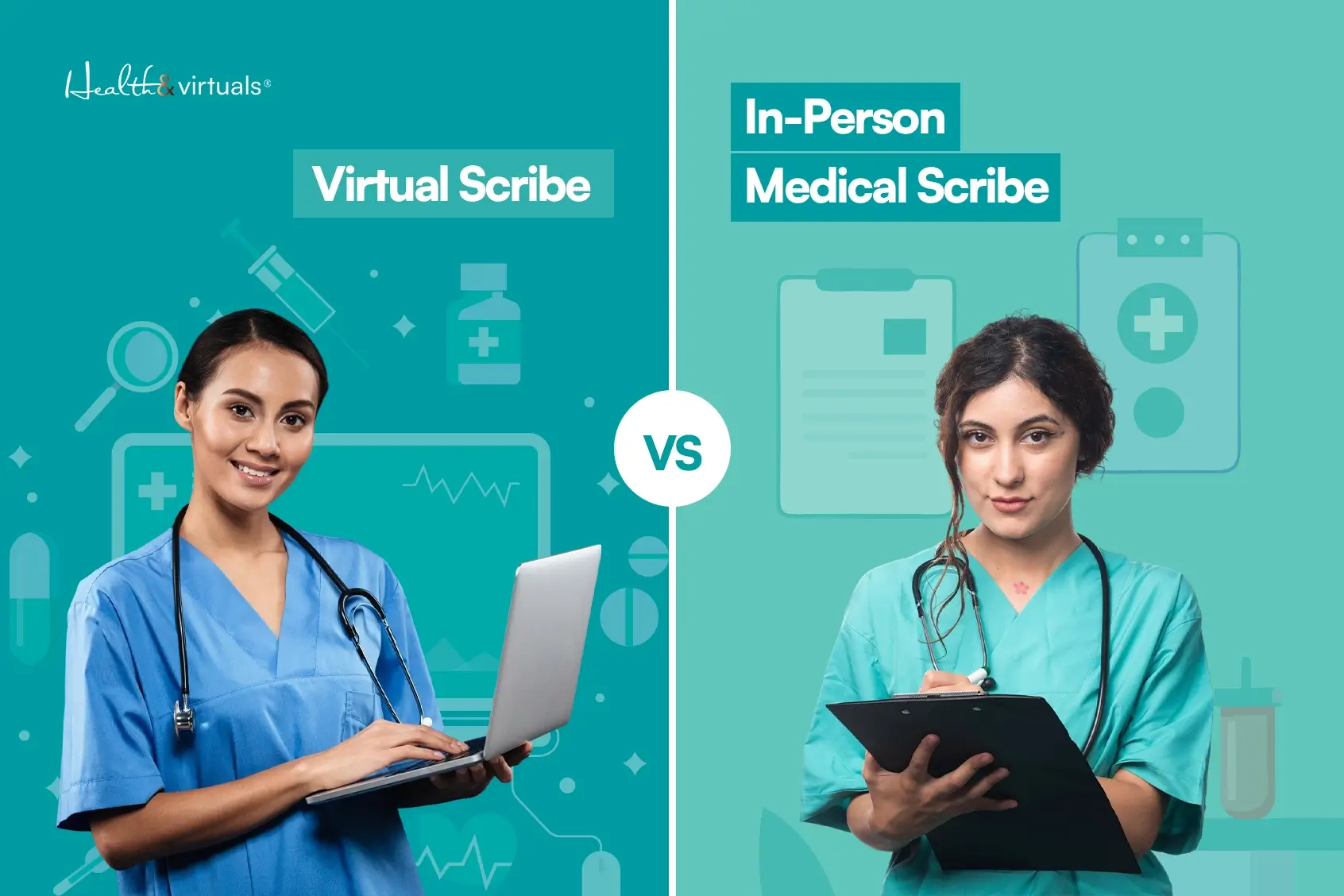
Medical scribes can be classified into two types: virtual medical scribes and in-person scribes. Both alternatives have their own strengths and weaknesses. If you’re trying to find the best solution for your practice, knowing the difference between the two can make it easier. So, read on and make an informed decision.
What Is a Virtual Medical Scribe?

A virtual medical scribe is a professional person who records the interactions with the patients remotely. The scribe is not present in the clinic physically. Rather they connect using safe audio or video channels.
Virtual scribes are usually connected to the EHR system of the practice remotely and write clinical notes, update patient records, and help them with documentation as the physician is attending to the patient.
Duties of a Virtual Scribe
The tele scribes carry out most of the documentation work that the traditional scribes do, only that they do it remotely. They typically have to deal with:
- Note-taking of patient meetings at appointments.
- Adding a history of the patient, drugs, and symptoms in EHRs.
- Writing clinical notes, including SOAP notes.
- Helping with coding and documentation of bills.
- Fetching medical records and laboratory results for the physicians.
What Is an In-Person Medical Scribe?

A medical scribe is an in-person worker who operates in the clinical practice with a physician. They normally follow the doctors when they are meeting the patients and register the visit details in real time.
Such scribes are in the same room as the examiner or the surrounding workstation so that they can observe the interactions of the patients, pose clarifying questions, and record the information in real-time.
The in-person scribes have been demonstrated to be adapted in high-volume settings like emergency departments, urgent care clinics, and specialty practices with high needs for fast documentation.
Duties of an In-Person Scribe

In-person scribes perform diverse clinical documentation activities within the healthcare facility, and these include:
- Documenting patient interactions in the exams.
- Real-time updating of electronic health records.
- Recording findings of physical examination and treatment plans.
- Developing discharge summary and referral note.
Since they are on-site when the patient is visiting, in-person scribes are able to react immediately to requests by the physician and also record more information about the interaction.
Virtual Scribe vs In-Person Medical Scribe: Key Differences
Although both attempts to decrease the workload of physicians, their effects on the working process, costing system, and work flexibility can differ dramatically.
→ Location and Mode of Work
Virtual scribes work on remote access to the EHR systems, and this implies that usually a physician communicates with the involved telescribe using audio connections, headsets, or secure telehealth applications. This installation will enable the writer to record patients’ visits in real time without necessarily being in the clinic.
Since remote virtual medical scribes are remote, they are capable of assisting several providers in various locations, which may be particularly beneficial to healthcare organizations that have a distributed workforce or telehealth.
Face-to-face scribes, in their turn, are incorporated into the clinical setting. They are physically in an exam room and can notice procedures, body language, and other situational aspects that may not always be recorded by the use of audio communication. This physical presence may result in more detailed documentation and result in physicians providing rapid verbal directions during the encounter.
→ Operational Scalability
The other significant distinction is in the operational scalability. The expansion of virtual scribe services is fast because the providers can reach trained scribes without hiring or training a new employee.
Conversely, scribes are usually recruited, onboarded, trained, and provided with space in the clinic, which is in contrast to the tasks of hiring a scribe.
→ Cost Structure
There are also differences between the two models in cost structure. A remote medical scribe can also be priced based on subscription or per service, which can reduce overhead costs. Face-to-face scribes act more as conventional employees, i.e., the practices should be considerate of salaries, benefits, and resources at the workplace.
Benefits of Virtual Medical Scribes

Virtual scribe solutions are beneficial in the following ways.
→ Cost efficiency
Virtual scribes are usually cheaper than an in-house staff due to the remoteness of their work. Office space, equipment, and on-site management are some of the expenses that practices can avoid.
→ Scalability
Virtual scribes are able to grow easily to accommodate two or more providers or a developing healthcare system.
→ Reduced physician workload
Research has revealed that remote scribes save time in documentation to a great extent. In one study, physicians who made use of virtual scribes realized significant decreases in EHR time per appointment, such as clinical notes and after-hours reporting time.
→ Reduced burnout
Physician wellness can also be enhanced by medical scribes. The study reported that doctors who had scribes had their burnout levels reduced by 26.8 percent.
See: How remote talent can transform your US healthcare practice….
Limitations of Virtual Medical Scribes
Although they have their benefits, virtual scribes have their drawbacks as well.
→ Technology dependency
Remote medical scribing needs to have good internet connections and a secure software platform. Technical problems can interfere with documentation procedures.
→ Retardant social communication
Virtual scribes do not enter the examination room. Therefore, they do not get visual cues or nonverbal information that might be of help in documentation.
→ Privacy concerns
When collaborating with a remote virtual scribe service, healthcare organizations should consider that patient privacy rules are to be adhered to, and data transmission should be secure.
Benefits of In-Person Medical Scribes

Face-to-face scribes still remain a significant part of most healthcare facilities.
→ Real-time collaboration
Physical presence will enable the telemedicine scribe to liaise with the physicians and clear information immediately.
→ Enhanced situational knowledge
On-site scribes have the opportunity to watch how the patient interacts, their body language, and how they are examined, which could enhance the quality of clinical notes.
→ Seamless workflow
In-person scribes might be less intrusive to the daily workflow and team communication since they will work within the clinical setting.
Limitations of In-Person Medical Scribes

Despite its effectiveness, there are also a few challenges that face the in-person scribes.
→ Higher operational costs
Employment of on-site scribes comes with other expenses like training, office, equipment, and employee benefits.
→ Limited availability
It may be challenging to recruit and retain qualified scribes. Particularly with smaller clinics or rural health care settings.
→ Staff management
The healthcare practice has to deal with scheduling, in-house scribers training, and turnover.
Which Option Is Better for Your Practice?

The decision between a virtual or in-person medical scribe is up to your practice.
Virtual scribes can be applied in the best practices that:
- Desire to cut down on the operations.
- Require adaptable documentation assistance.
- Have practice in different locations.
Face-to-face scribes can be used in practices that:
- Demands strong cooperation when attending to patients.
- Like on-site documentation support.
- Employment in emergency departments with high activity.
Both solutions will greatly decrease the workload of the administration and enhance the output of the physicians. In most instances, it boils down to workflow choices, budget, and technology at hand.
Hire Reliable Virtual Medical Scribes with Health & Virtuals!
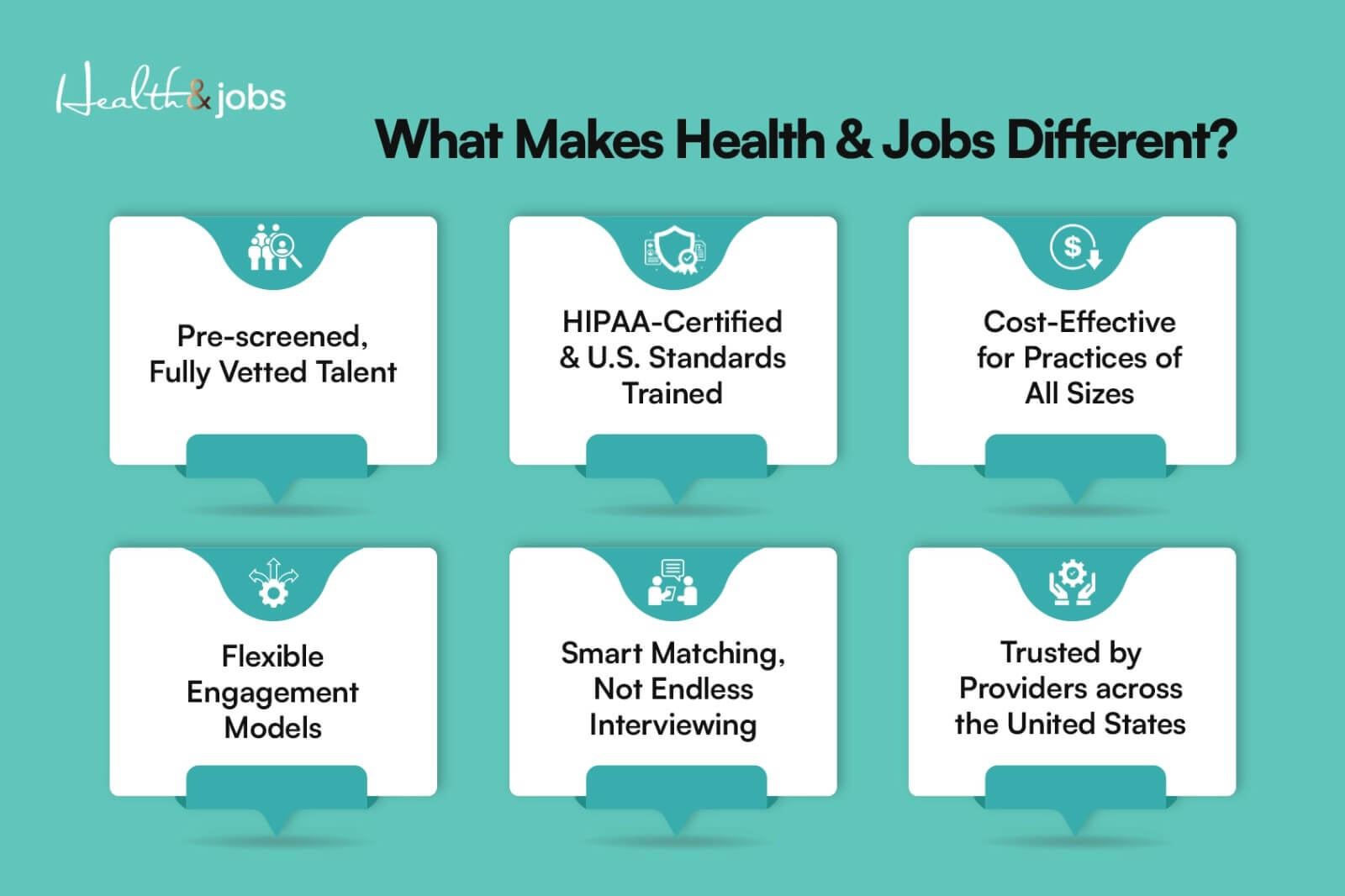
If you’re looking to enhance the efficiency in your practice, consider cooperating with professional virtual scribe solutions from Health & Virtuals!
Our handpicked, trusted virtual scribes assist the doctor in clinical documentation oversight, electronic health records updating, and easing the administration burden.
By trusting us, your practice can cut down the workload of the physicians, increase the time spent with patients, and improve the level of operational efficiency.
So, get started now!
FAQs
Are all EHR systems compatible with virtual scribes?
The majority of virtual scribe services are trained to integrate with popular EHRs, including Epic, Cerner, and Athenahealth. But compatibility can be related to the individual service provider and the software installation of the healthcare practice.
Are remote medical scribes HIPAA compliant?
Yes. HealthAndVirtuals maintains high adherence to the HIPAA compliance standards and operates on a secure network, encrypted communication and confidentiality contract to ensure patient data security.
Are medical scribes useful in decreasing physician burnout?
Yes. Research indicates that hiring medical scribes can greatly decrease worker burnout by decreasing EHR hours and documentation work.

 Although the specific tasks can differ according to the nature of the wellness practice, the vast majority of virtual wellness assistants can operate through some of the basic tasks:

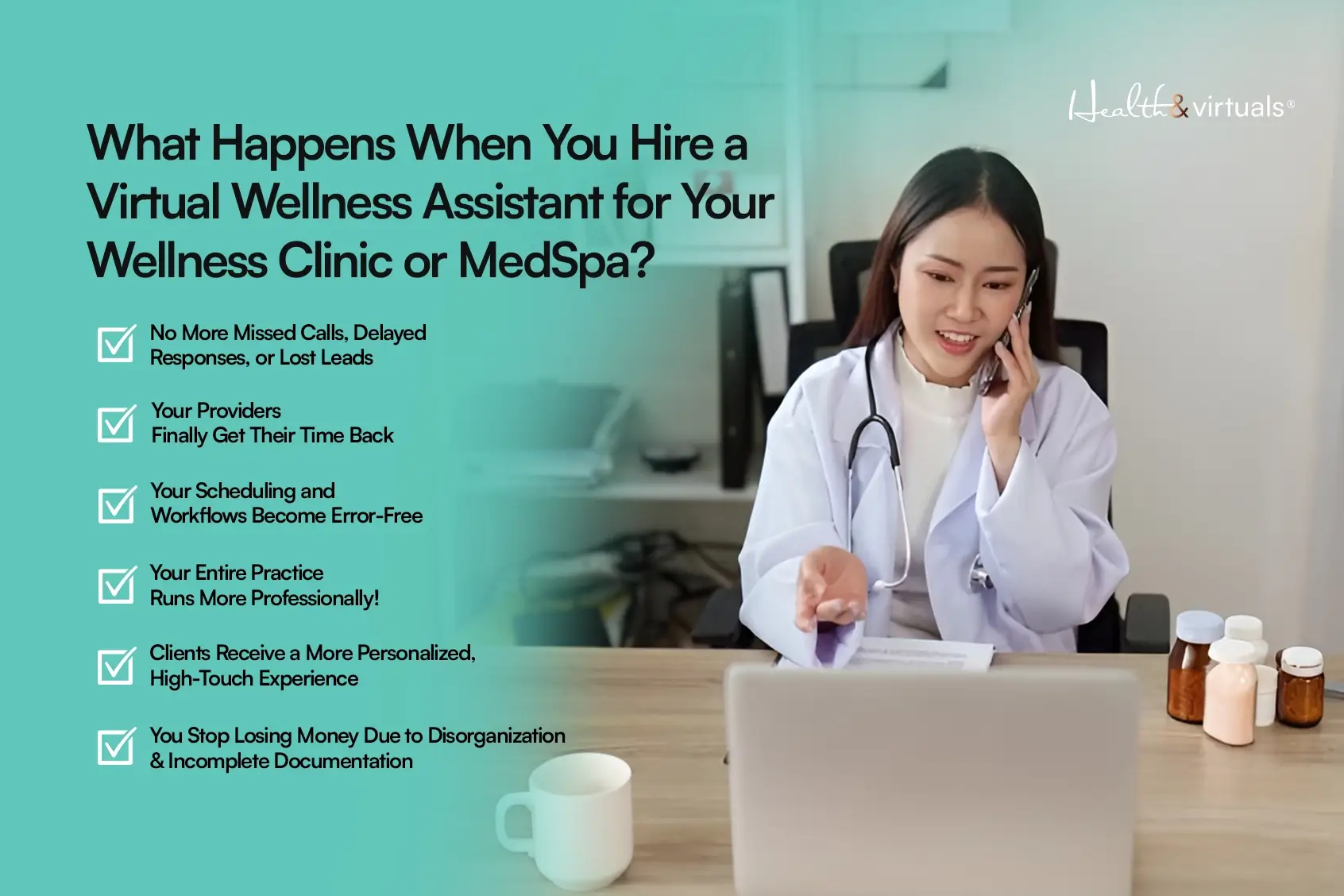 There are many benefits of hiring a virtual wellness assistant. Here are a few important ones:









 There are a