10May

Virtual Recruiting | Pros, Cons & Best Practices!

Hiring has seen its biggest shift since the COVID-19 lockdown six years ago. The era of long waits for in-person interviews, unnecessary office visits and geographic limitations is over. In addition to hiring virtual support for their businesses, employers are now increasingly relying on more flexible hiring processes that include virtual recruiting methods such as remote interviews, digital assessments, and online onboarding. 

A report by the Society for Human Resource Management backs this shift with data that over 82% of employers have adopted virtual interviews for the hiring process, including sourcing to onboarding. While beneficial in many ways, there is a substantial set of challenges associated with it. Knowing about the both sides is key to building a recruitment strategy that actually works. 


What Is Virtual Recruiting?

Professional adapting to digital workflow showing good skills for a job and remote job skills in actionVirtual recruiting is a digital hiring process of hiring candidates for a business using online tools. It makes hiring easier for employers as it involves sourcing, screening, and evaluating candidates without in-person interaction. 

Candidates no longer have to wait in line for walk-in interviews, visit offices for assessments, and scour job fairs. Instead, they can hunt for a job as per their specialty from the comfort of their home, send application via online forms, and wait out for a response from the business. 

Common Virtual Recruiting Methods

The most common online recruiting methods include: 

  • Video interviews via Zoom, Meet, etc. 
  • Digital application forms. 
  • Virtual career fairs and hiring events. 
  • AI-based resume screening. 
  • Remote assessments and tests. 
  • Recruiting via social media ads. 

These methods have become the standard for recruiters to manage the entire hiring process remotely, only calling in the candidate in case of a final selection. 


Why Is Virtual Recruiting Becoming More Popular?

illustration image showing computer, watch, calendar, showing importance of remote working time management

Online recruitment is not just a trend. Instead, it is a response to evolving dynamics of a workplace that relies on an efficient mode of operations. 

The following factors are the biggest drivers of growth in virtual recruiting: 

→ Increase in Remote Work Opportunities

Companies are no longer limited to hiring within a specific location.  

→ Access to Global Talent 

With online recruiting and virtual opportunities, the organizations can reach candidates across regions and time zones without concern for geographic limitations.

→ Faster Hiring Cycles

Digital tools are an efficient way to reduce scheduling delays and manual processes of onboarding

→ Cost Efficiency 

A virtual hiring process is a great way to minimize commute difficulties & expenses on the candidate’s end. It also lifts administrative burden off the hiring staff. 

More importantly, virtual recruiting allows candidates flexibility, speed, and convenience. 


How Virtual Recruiting Works?

Resume and portfolio preparation highlighting job skills for resume and top skills for remote jobs

At its core, online recruiting of any type of virtual assistants is not much different from traditional hiring. It essentially involves the same steps, albeit executed digitally.

  1. Job posting and sourcing: Businesses advertise roles online through job boards and platforms such as LinkedIn.
  2. Application screening: Employers review applications with the help of automated tools.
  3. Virtual interviews: Candidates are assessed through video meeting platforms. 
  4. Skills evaluation: Online tests or assignments are prepared to measure the capability of a candidate.
  5. Final selection and offer: Once selected, candidates are presented with an offer via email.
  6. Digital onboarding: New hires are integrated into the organization virtually.
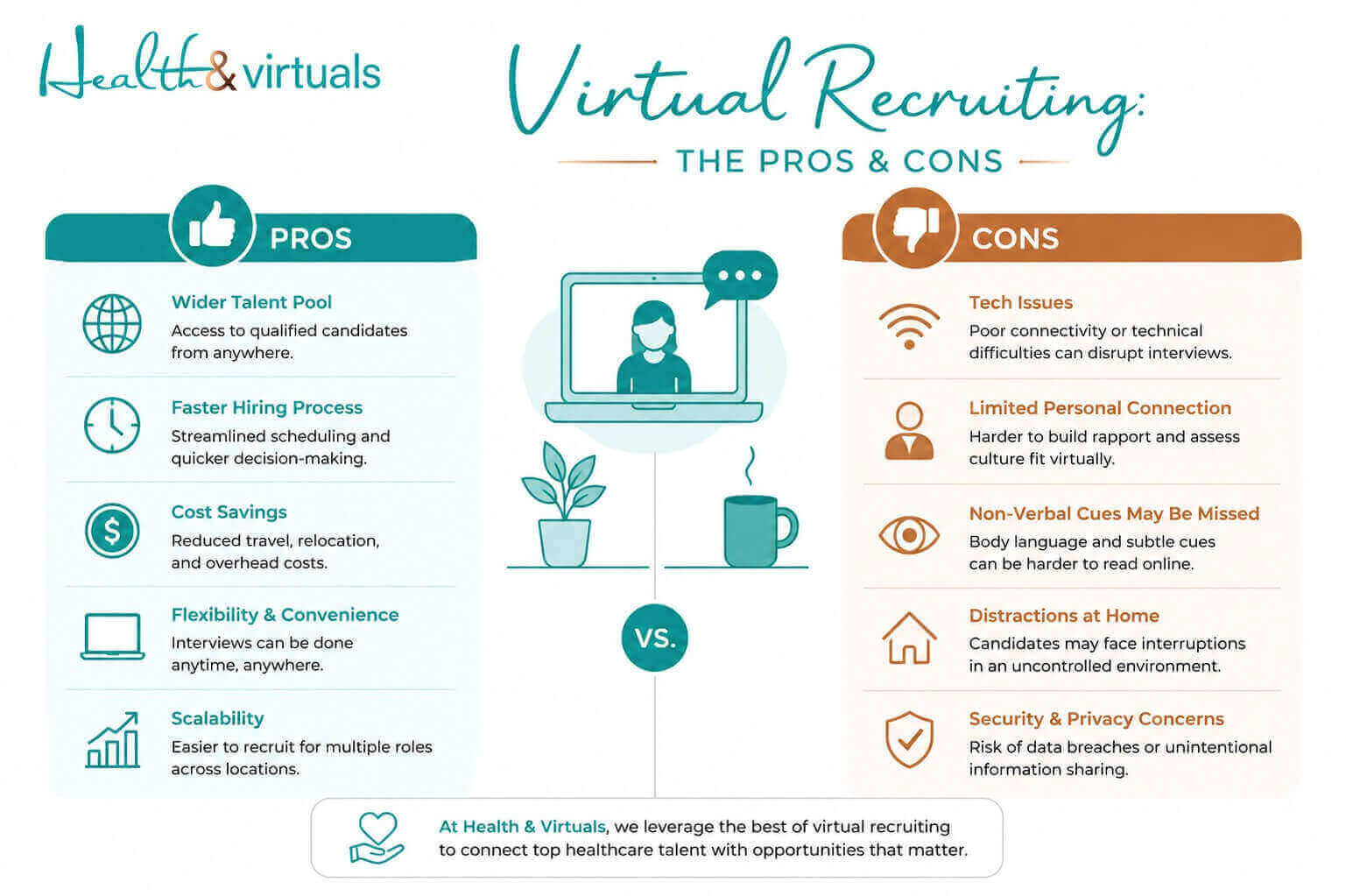
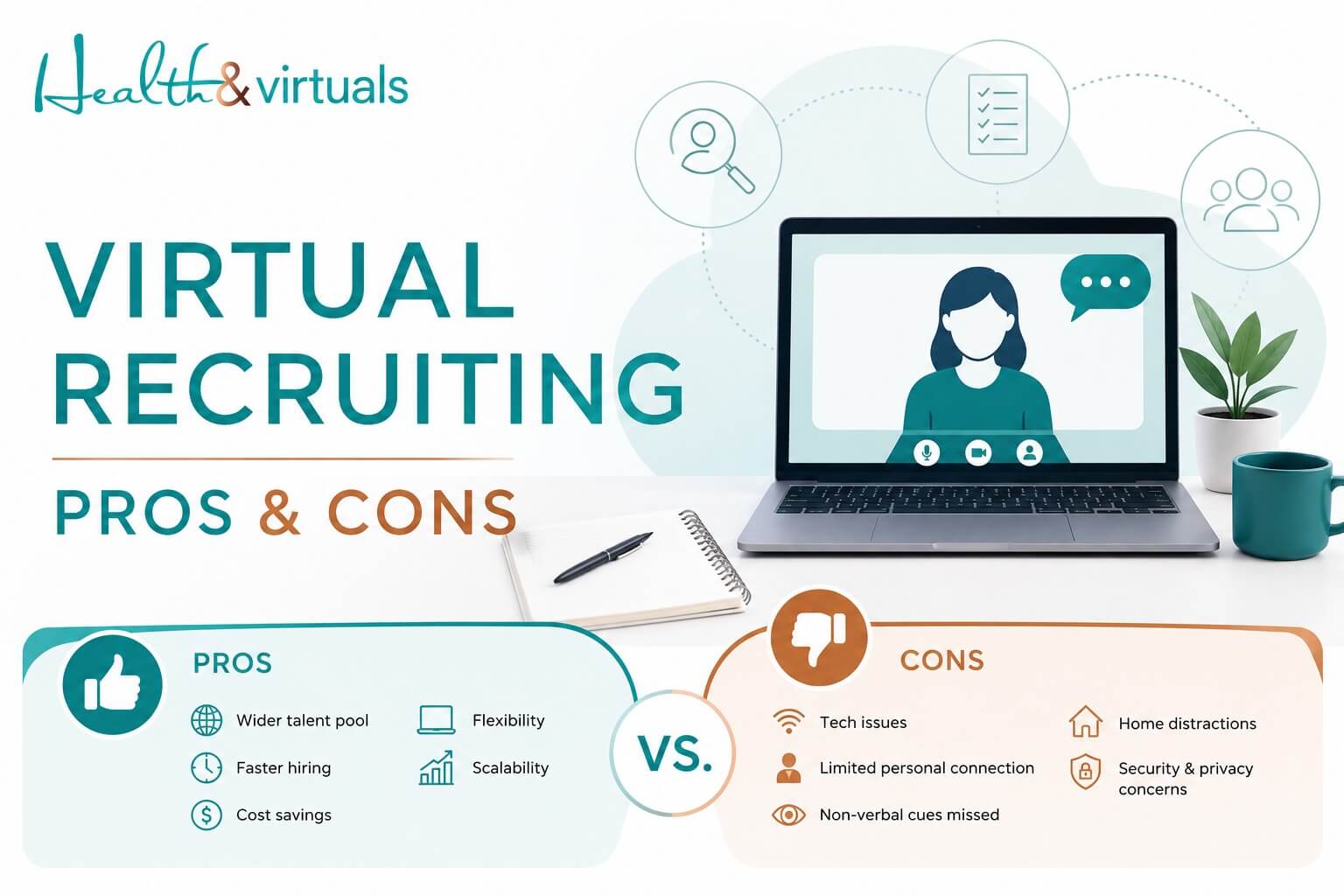
difference between pros and cons of online recruiting

Pros of Virtual Recruiting

Modern organizations are particularly tempted by virtual recruiting due to the number of benefits it offers, such as: 

1. Global Talent Acquisition

Recruiters are no longer limited by geography, allowing them to hire purely on the basis of talent regardless of location.

2. Faster Hiring Process

Digital exchange of documents as well as online interviews saves ample time for both the employer and the candidate.

3. Cost Savings

Organizations save on travel allowances, a designated office space, and event-related expenses for virtual candidates.

4. Increased Flexibility

It becomes easier to coordinate a convenient time for both recruiters and candidates to engage, improving participation and efficiency.

5. Scalability

Virtual processes make it easier to handle large volumes of applicants without significantly increasing resources.


Cons of Virtual Recruiting 

Despite its advantages, virtual recruiting strategies may fall short in a few areas. 

These may include: 

1. Limited Interaction

Virtual settings can make it harder to assess personality, communication style, and cultural fit for both employer and candidate.

2. Technology Dependence

The hiring process may experience disruption due to technical issues, including connectivity problems and platform limitations.

3. Candidate Engagement Challenges

Candidates may find it hard to maintain attention and engagement in virtual settings.

4. Risk of Miscommunication

Sometimes, interviews may not go as planned or be misinterpreted due to lack of non-verbal cues in virtual processes.

5. Potential Bias in Digital Tools

Organizations relying on AI-driven screening tools risk judging candidates on the basis of potential bias associated with them.


Best Practices for Virtual Recruiting 

illustration about the services provide by best recruitment agency

Differences between in-house recruiting and online hiring, or we can say pros outweigh the cons… So, virtual recruiting is here to stay. Thus, to make do with it in the most effective way, organizations need to move beyond basic implementation and focus on strategy.

→ Standardize the Process

Hospital, businesses, & organizations should aim to create a structured virtual recruitment workflow to ensure consistency across candidates.

→ Use the Right Mix of Tools

Instead of choosing one digital software and sticking with it for all hiring-related processes, they could combine video interviews, assessments, and communication platforms to create a balanced evaluation.

→ Prioritize Candidate Experience

To make sure candidates are loyally aligned to their potential future workplace, organizations must rely on clear communication, timely updates, and smooth scheduling during the recruitment process.

→ Train Hiring Teams

Recruiters and managers should be trained to evaluate candidates effectively in a virtual setting.

→ Maintain Human Connection

Even in a digital process, personalized interaction is key to building trust and engagement.


Tools Used in Virtual Recruiting

An effective virtual hiring process involves the use of multiple digital tools for different stages. These include: 

  • Zoom: for live interviews.
  • Microsoft Teams: for communication and interviews.
  • LinkedIn: for sourcing candidates.
  • Google Forms: for managing applications.

What Industries Benefit Most from Virtual Recruiting?

Virtual recruiting is particularly effective in industries where work can afford a smooth transition to remote or digital, such as: 

  • Technology and software development.
  • Digital marketing and media.
  • Customer support and virtual services.
  • Healthcare administration and virtual assistance.
  • Wellness, Chiropractic & Dental practices.
  • Finance and consulting.

These industries benefit from faster hiring cycles and access to global talent pools.


Future of Virtual Recruiting

illustartion of a job recruiter acting as headhunter to connect talent with jobs

As the future of work is likely to be hybrid, virtual recruiting is expected to continue evolving alongside in-person interactions. 

Future remote hiring strategies may include:

→ Greater use of AI in candidate screening.

→ More immersive virtual interview environments.

→ Enhanced data-driven hiring decisions.

→ Increased focus on remote-first workforce strategies.

Virtual recruiting has the power to streamline hiring. However, it requires strong backing by the right talent and process. With Health & Virtuals, a trusted virtual assistant recruitment agency, you can access pre-vetted professionals and end-to-end hiring support to build a more efficient, scalable workforce.


Hire your Virtual Staff, NOW!


FAQs

What is virtual recruiting?

Virtual recruiting is an online hiring process. Virtual hiring is the process of sourcing, screening, and hiring candidates using digital tools in lieu of in-person interactions.

What are the benefits of virtual recruitment?

Main benefit of online hrirng reduces hiring costs. Also the virtual hiring process is faster than convcentional hiring process and expands access to global talent acquisition.

Is virtual recruiting effective? 

Yes, virtual recruiting is effective, given it is supported by the right tools and processes. It enables efficient hiring without compromising candidate quality.
02May

Benefits of Hiring a Virtual Medical Billing Assistant for Your Practice!

Medical billing remains one of the most critical functions within a healthcare practice, and thus often the most strained. A patient may receive the best care if the financial health of a clinic is optimal. 

There are many factors that impact the revenue of a medical practice, such as errors in billing, delayed submissions, and inefficient follow-ups. Studies suggest that up to 80% of medical bills contain errors, leading to claim denial rates that can range between 5% to 10% or even higher, depending on the practice and specialty. 

Meanwhile, administrative tasks continue to account for a substantial portion of operational costs in healthcare. A landmark study for the United States and Canada found that administrative costs for healthcare providers and insurance companies have exceeded $812 billion per year. It is obviously much higher than in countries with simplified, single-payer systems. 

This persistent dilemma has led many practices to turn to a cost-effective solution, which is to hire a virtual medical billing assistant instead of solely relying on in-house teams.


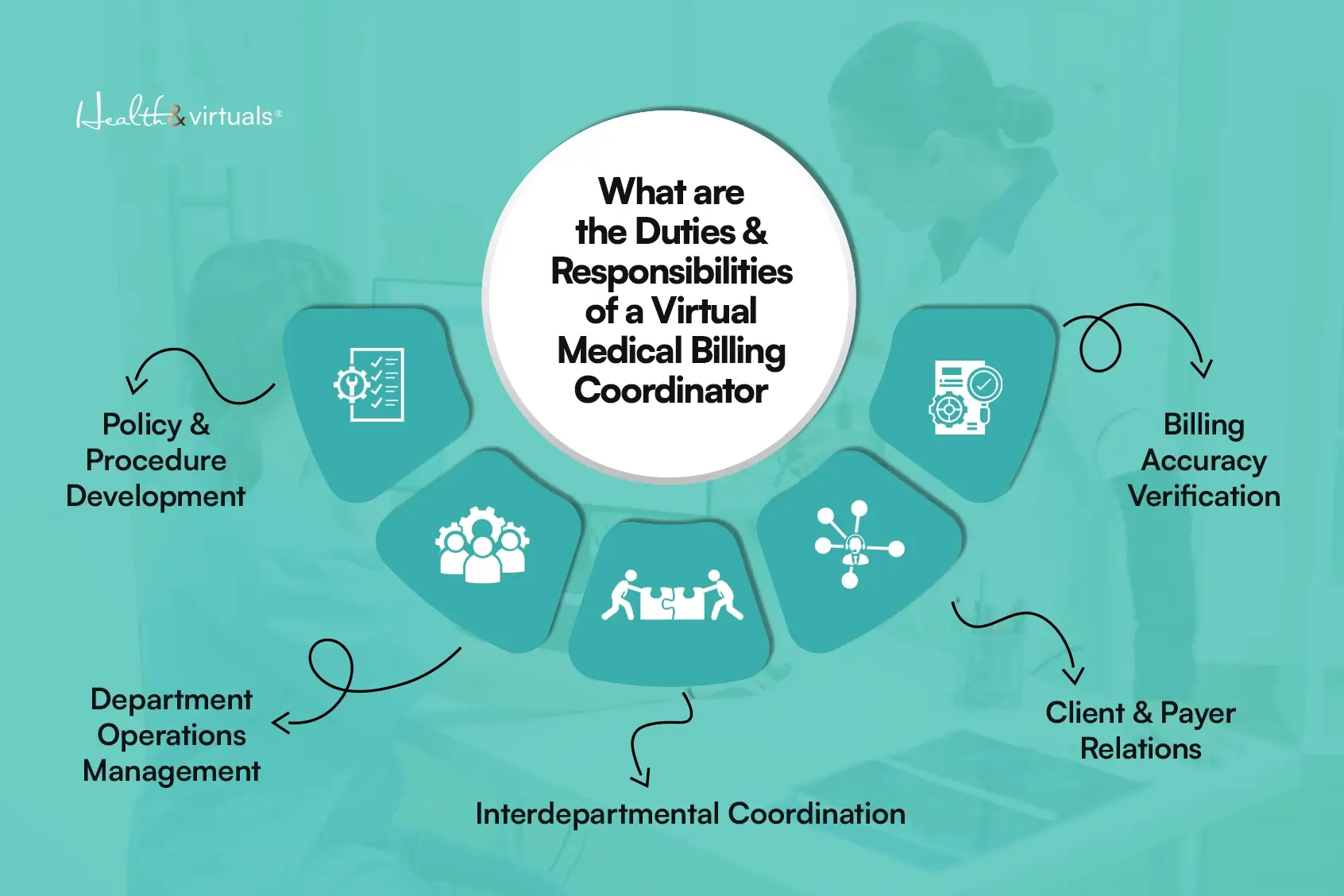
Who is your Virtual Medical Billing Coordinator?

What-are-the-Duties-Responsibilities-of-a-Virtual-Medical-Billing-Coordinator-copy A virtual medical billing coordinator is a remote professional trained to handle billing and revenue cycle management tasks for healthcare providers. 

They are meant to improve efficiency, accuracy, and overall revenue performance of a medical practice by assuming the following responsibilities: 

  • Claim submission and follow-ups. 
  • Insurance verification. 
  • Payment posting and reconciliation. 
  • Denial management and appeals. 
  • Maintaining accurate billing records. 

Despite operating remotely, a virtual medical billing assistant integrates into the clinic’s existing systems and workflows due to the administrative nature of their jobs.


Why Practices Are Moving Toward Virtual Billing?

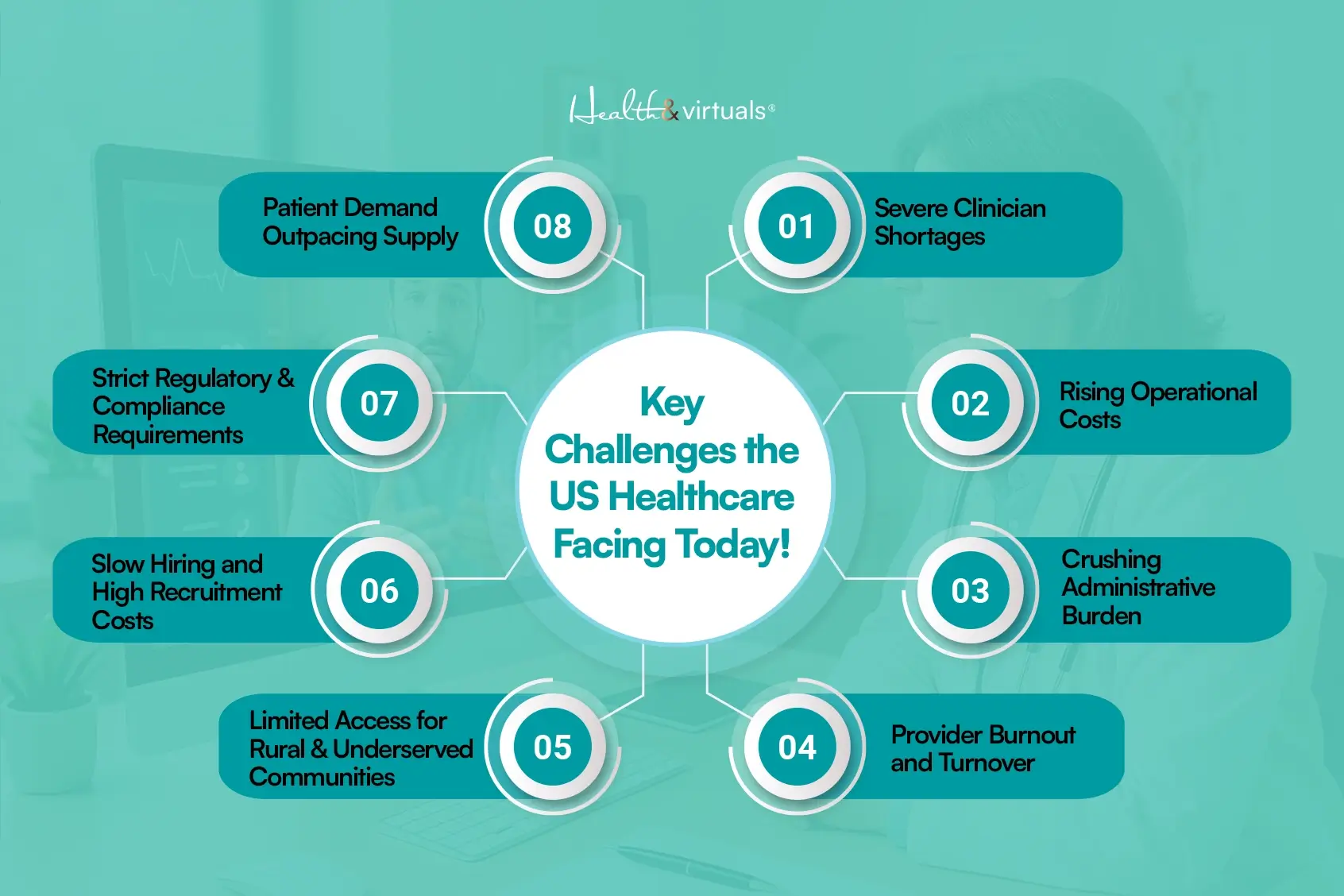
Key Challenges the US Healthcare Facing Today!

The rising trend of shift toward virtual billing in healthcare did not come out of the blue. Instead, it is a product of persistent operational pressure with a direct effect on a practice’s revenue cycle. 

Industry analyses already stated that outsourcing your revenue cycle management can reduce operational costs by 30% to 40%, depending on practice size and specialty. 

Healthcare practices today face: 

  • Increasing patient volumes. 
  • Complex insurance requirements. 
  • Rising administrative costs. 
  • Staffing shortages. 

Relying on an in-house team to manage billing is often a recipe for disaster due to limited resources. 

Virtual medical billing presents itself as a reliable alternative, via which practices can: 

  • Reduce internal workload. 
  • Access specialized expertise. 
  • Maintain consistency. 

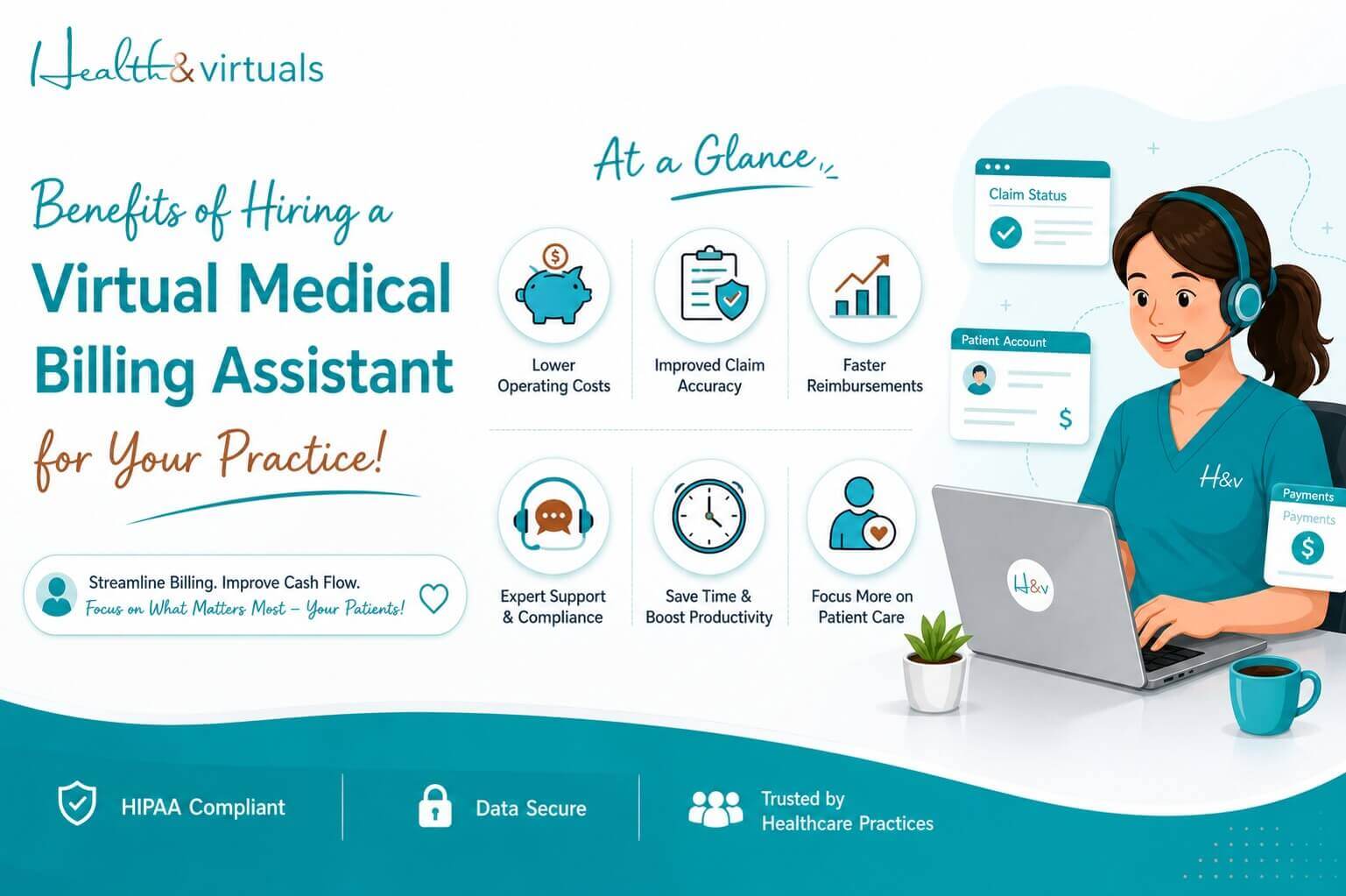
What are the Benefits of Hiring a Virtual Medical Billing Coordinator?

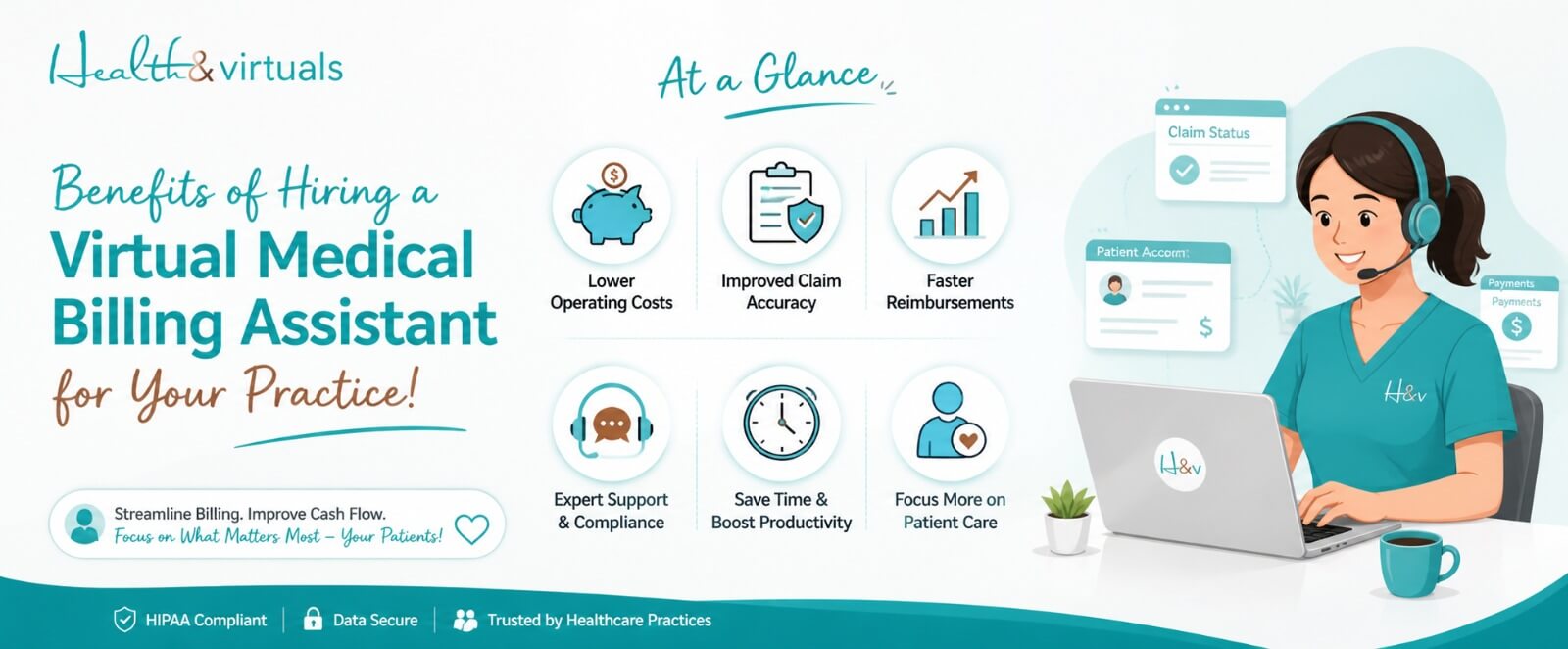
infographics about Benefits of Hiring a Virtual Medical Billing Assistant for Your Practice!

There are endless benefits to hiring a virtual medical billing assistant for a healthcare practice. 

One of the key benefits is that outsourcing administrative work as sophisticated as billing allows clinics to focus on patient care while ensuring that revenue cycle management remains efficient and uninterrupted.

Other benefits include: 

1. Reduced Operational Costs

If a practice opts for hiring in-house staff to oversee billing, they are looking at multiple additional expenses. These include salaries, benefits, training, office space, and equipment.

A virtual assistant eliminates many of these overhead costs. They only require reimbursement for the service they provide – without the financial burden of maintaining a full-time, on-site employee. This makes it a cost-effective solution, maximizing your ROI, especially for small to mid-sized practices.

2. Improved Billing Accuracy

Billing errors are one of the leading causes of claim denials and revenue loss. Virtual medical billing assistants are typically well-versed in coding standards, payer requirements, and claim submission processes. 

Their focused expertise reduces:

  • Coding errors.
  • Incorrect claim submissions.
  • Documentation inconsistencies.

3. Faster Claim Processing and Payments

To maintain a steady cash flow of a medical practice, it is pertinent to timely submit claims and Timely claim submission and follow-ups. 

Virtual billing assistants ensure:

  • Claims are submitted promptly.
  • Follow-ups are conducted consistently.
  • Outstanding payments are tracked and addressed.

This reduces delays in reimbursement and improves the overall financial cycle of the practice.

4. Effective Denial Management

In case of denied claims, the financial health of a clinic is significantly affected. Moreover, it also increases the workload on the administrative team. 

Hiring a virtual medical billing coordinator helps reduce denial rates and improve approval outcomes by: 

  • Identifying root causes.
  • Correcting errors.
  • Resubmitting claims with proper documentation.

5. Increased Time for Patient Care

Due to the work demand of administrative tasks, healthcare practices may end up compromising on patient care. Delegating billing responsibilities to a virtual medical assistant, in-house teams are able to: 

  • Focus on patient interaction.
  • Improve service quality.
  • Reduce administrative stress.

This shift improves both patient experience and staff productivity.

6. Scalability and Flexibility

Virtual medical billing coordinators offer scalability in terms of their services due to the remote nature of their jobs, thus offering an exceptional advantage to employers. 

A healthcare practice may scale its services based on:

  • Patient volume.
  • Billing complexity.
  • Practice growth.

7. Access to Specialized Expertise

Billing regulations, coding updates, and insurance policies are constantly evolving.

The nature of their roles equips virtual billing professionals to stay updated with industry regulations, coding standards, and payer-specific requirements without requiring additional training.

8. Better Revenue Cycle Management

All of these benefits come together to generate a stronger revenue cycle. With improved accuracy, faster processing, and consistent follow-ups, practices experience:

  • More predictable cash flow.
  • Reduced revenue leakage.
  • Better financial stability.

When to Hire a Right Virtual Medical Billing Assistant?

Virtual scheduler can improve patient experience and reduce doctors burden through easy appointment booking

There are certain signs that may force a healthcare practice to consider hiring a virtual medical billing assistant. These include:

  • Increase in claim denials.
  • Delays in payments.
  • Overwhelmed staff. 
  • Frequent errors in coding or submissions.
  • Rising administrative costs.

These indicators suggest that the medical billing system of a clinic is under strain and needs support.


Who Should Hire a Virtual Medical Billing Coordinator? 

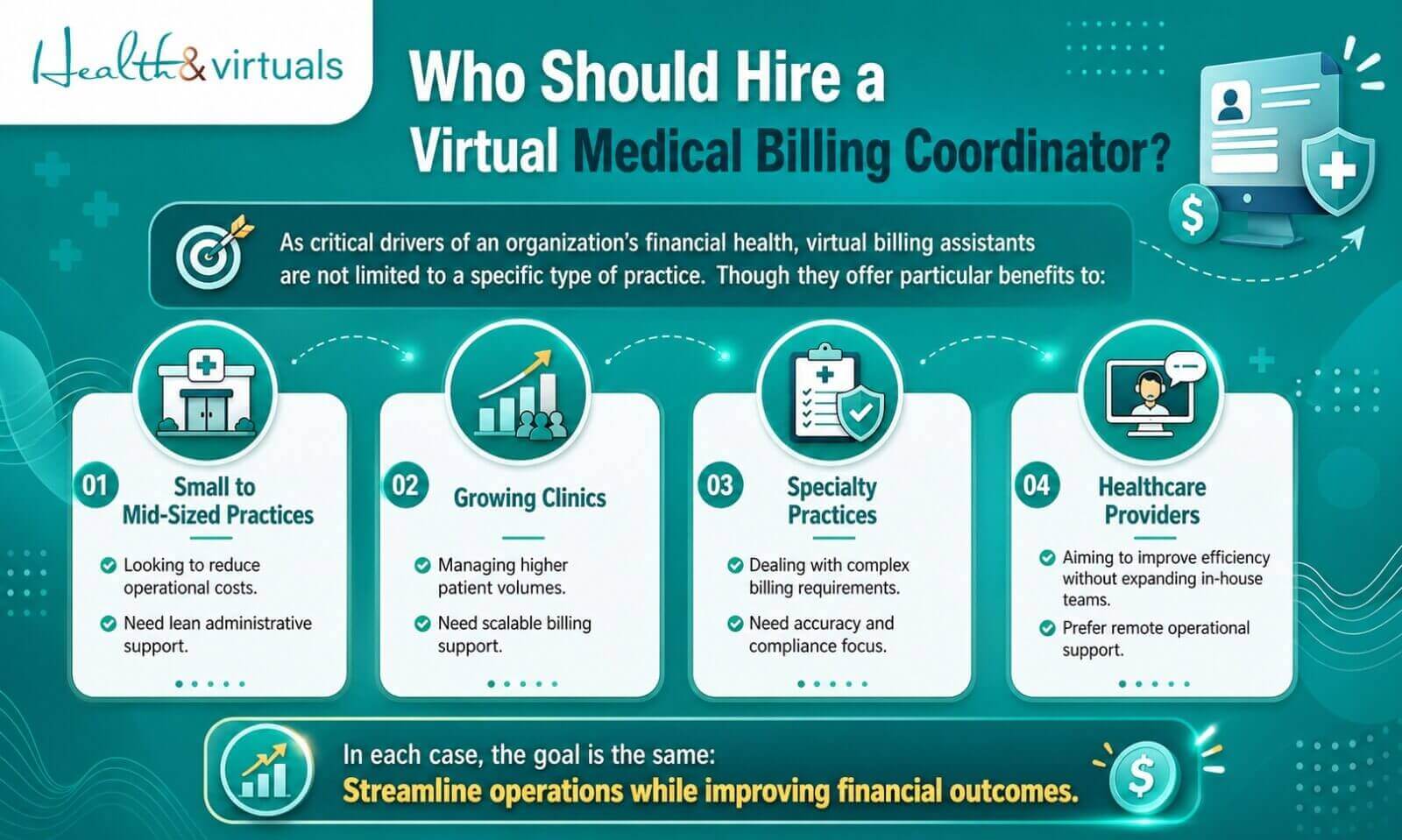
infographics about Who Should Hire a Virtual Medical Billing Coordinator? 

As critical drivers of an organization’s financial health, virtual billing assistants are not limited to a specific type of practice. 

Though they offer particular benefits to:

  • Small to mid-sized practices that, looking to reduce costs.
  • Growing clinics; managing higher patient volumes.
  • Specialty practices dealing with complex billing requirements.
  • Healthcare providers aiming to improve efficiency without expanding in-house teams.

In each case, the goal is the same: streamline operations while improving financial outcomes.


Ready to Improve Your Medical Billing Performance?

hire virtual staffing with health & virtuals

If your practice is struggling with claim denials, delayed payments, or rising administrative costs, it may be time to consider a more efficient approach.

Hire a skilled Virtual Medical Billing Assistant today and streamline your revenue cycle from day one.

→ Reduce billing errors.

→ Improve cash flow.

→ Save administrative time.

→ Focus more on patient care.

Get in touch today to find the right virtual billing support for your practice and start optimizing your revenue cycle.


FAQs

What is the difference between in-house and virtual billing coordinators? 

Your in-house billing coordinator works at your workplace. Only in your time zone’s duty hours. A virtual billing coordinator is remotely available and scalable to serve your practice virtually. 

Is hiring a virtual medical billing coordinator cost-effective? 

Yes. It’s proven. Hiring a virtual medical billing coordinator significantly reduces expenses related to salaries, training, office space, and other benefits. Making it a more cost-effective option for healthcare practices.

How quickly can a virtual billing coordinator start working? 

Most virtual billing coordinators can begin within a few days. Though, it depends on the practice’s onboarding requirements, system access, and the complexity of their billing processes.

30Apr

Top Skills You Need to Get Hired for Remote Jobs!

Remote work has shifted from a temporary trend to a permanent part of how companies hire and operate…. Today, employers are no longer just looking for any remote candidate who can do the job – they are looking for professionals … who have the right skills to work effectively in a remote environment

Do you know that over 424,000 remote roles were posted all over the world in 2025 alone? It is the biggest year of remote opportunities that we have ever had. Meanwhile, the pace of demand keeps rising, as more than 20 percent of remote job postings are on the rise in 2026.

But, there is a downside to the opportunity: competition is growing. Remote jobs give the opportunity to attract talent all over the world, and employers are no longer restricted to local talent pools. Moreover, approximately 65 percent of remote jobs today focus on seasoned professionals, indicating that there is now an evident shift to skill-based employment.

You need some skills to get hired… from communication and time management to digital collaboration tools, these abilities now determine who gets hired and who gets overlooked. 


Why Are Remote Job Skills So Important Today?

Professional working remotely on a laptop showing digital communication and online collaboration toolsA remote workplace does not work the same way as traditional office setups. Companies place a lot of faith in output and communication without physical control. This change has changed the appearance of valuable job skills.

Remote work has more workforce trends. The experts state that nowadays, almost 79 out of 100 workers who can work remotely do it at least in part (it was less than 6 percent before 2020). This radical transformation has put companies back into the process of reconsidering productivity, cooperation, and performance measurements.

Business-wise, remote workers will cut overhead and widen access to talent around the world. Yet it also brings with it risks, such as miscommunication, time-zone delays & accountability. That is why employers give priority to applicants who are skilled, and who are able to show independence, digital savvy & reliability.

Concisely, now good skills for a job remotely are not a nice-to-have anymore. They are business skills that have a direct influence on business results.


What Are The Essential Remote Work Skills You Must Have?

remote worker with top skills is hired and working virtually on laptops highlighting communication and productivity in remote work environment

Remote recruitment is moving towards skill-based hiring & the most successful performers exhibit a combination of technical and behavioral job skills list.

→ Skills in Communication (Async + Sync)

Remote work is based on effective communication. You cannot afford fast and brief desk talks, as in the office. On the contrary, you will have to express yourself using written notices, video conferences, and collaborative technologies. 


Employers are interested in candidates who can easily communicate concisely without having to clarify all the time and across time zones.

→ Self-Management: Staying Productive Without Supervision 

Remote jobs require a lot of discipline. In the absence of supervision, your time and task prioritization and deadline achievement capability become critical. It is especially significant because the work of many companies has become distributed teams in different regions.

→ Technical Literacy for Remote Work Efficiency 

Tools are major in remote work: project management software, communication applications, and cloud-based solutions are all important. Knowledge of such tools as Slack, Notion, Trello, or CRM systems is popular and is required.

→ Adaptability and Problem-Solving 

Remote environments are changing rapidly. It can be new tools, changing priorities, or cross-functional cooperation, which requires flexibility. Employers prefer those who can be able to solve problems on their own without being directed.

→ Cooperation Over Time Zone

Remote working in many cases implies global work. The ability to work asynchronously and across time zones is an important remote job skill that can be overlooked by many candidates.

→ Results-Oriented Mindset

In remote environments, output is used as a measure of performance and not time spent working. Busy people are not sought after by companies because they are looking to hire people who are oriented to the achievement of measurable outcomes.


How Can You Improve Your Remote Work Skills?

illustration about Essential Skills of a Sales Development RepresentativeIt takes deliberate effort to develop remote-ready job skills. 

This list of job skills may not necessarily be learned formally as they are developed through experiences and exposure, unlike in traditional roles.

1. Stimulation

Start by simulating a remote work environment. Real life experience can be gained through freelancing websites or internships or remote jobs that are part time. The familiarity with remote workflow can be achieved even by doing personal projects with the aid of digital tools.

2. Learning

Another viable alternative is online learning. Communication, productivity & digital tools courses can help greatly enhance your preparedness. But simply learning will not suffice–it has to be applied.

3. Feedback

Feedback is also essential. Be it that you are working on a team project, or as a freelancer, actively solicit feedback on your communication, responsiveness and quality of output. 

The insights can be used to narrow down to specific skills in an online job that employers consider throughout hiring.

4. Consistency

Finally, your consistency. It matters! Telecommuting favors those who can be productive without being forced to do so. Routine creation and systems creation: the creation of routines and systems such as daily planning, tracking of tasks, and regular check-ins, can greatly enhance performance over time.


What Employers Look for in Remote Candidates?

illustartion of a job recruiter acting as headhunter to connect talent with jobs

Hiring managers treat remote candidates in a different manner as compared to conventional applicants. They also analyze behavioral signals that reveal remote readiness in addition to the technical qualifications.

  • Experience level: One of them is the level of experience. As has been mentioned above, most of the remote jobs target professionals in the middle-career segment. This portrays a favor towards those who do not need much supervision.
  • Reliability and trustworthiness: Reliability and trustworthiness are also a priority for employers. Because remote staff work on their own, businesses must be assured that business activities will be accomplished without having to watch over their shoulders.
  • Communication: Clarity of communication is another important aspect. Applicants who exhibit organized thoughts and articulate expression, particularly in written expression, are instantly singled out.
  • Global skills: Also, the companies appreciate global collaboration skills. Remote staff is usually set up at a distance, and the possibility to operate internationally and in various time zones is one of the substantial advantages.
  • Tech-savvy: Lastly, the focus on tech-enabled productivity is increasing. Employers do not only want applicants to be users of tools, but also to be efficient and effective users in order to enhance efficiency and teamwork.

What are the Best Ways to Display Remote Skills on Your Resume?

Resume and portfolio preparation highlighting job skills for resume and top skills for remote jobs

Being equipped with the appropriate top skills is one thing, but you must be able to demonstrate them.

Start by highlighting remote-specific experience. If you have worked remotely previously. Be able to include information like tools, communication methodology, and quantifiable results.

Rather than enumerating generic skills, emphasize impact. As an example, instead of stating that you had good communication skills, explain how you handled cross-time-zone cooperation or spearheaded distance projects and made them work.

Apply measures wherever feasible. Employers are next to respond to data-driven successes, be it the enhanced productivity, decreased turnaround time, or successful project delivery.

→ It is also necessary to re-tune to applicant tracking systems (ATS). Most organizations have automated processes that they use to sieve through the candidates, hence tuning your resume according to job-related keywords is quite important.

→ Lastly, with most of these remote jobs- particularly in technology, marketing or design- it may be more effective to show your portfolio, rather than what you have done.


Bottom Line

The remote work is no longer a niche possibility, but a competitive market around the world. The opportunity is evident with hundreds of thousands of jobs open and more positions on the rise. But so is the challenge.

In this space, qualifications are not enough. It involves a conscious effort to cultivate and showcase the competencies most desired by the remote employers, namely: communication, accountability, flexibility & performance-oriented results.

The next thing that you need to do is start developing your remote job skills for a resume, acquire some practical experience, and place yourself in a strategic position in the job market.


Looking For Remote Jobs? 

Job seeker holding a poster NEED A JOB. desperate and sad

Health & Virtuals supports remote professionals like you to prepare and get high-quality remote jobs by developing skills, providing career counseling, and accessing global jobs. 

We also offer a digital training school designed to polish your talent with top skills and make you job-ready for today’s competitive remote market.

Get hired with us and speed up your remote career with the right guidance, training, and opportunities from a trusted organization in the US…

18Apr

The ROI of Hiring Virtual Assistants | How Much Time & Money You Can Save?

Your virtual assistant (VA) is a remote professional who provides administrative, technical, or creative support to businesses. All without being physically present in your workplace. Their tasks often include managing emails, scheduling, data entry, and customer support. Also, many other routine operations help keep a business running smoothly.

Today, business owners face constant pressure to balance daily operations. Focusing on growth activities. Much of their time gets consumed by repetitive administrative work. This leaves less room for strategy and revenue generation. 

Virtual assistants help solve this problem by taking over time-consuming tasks, improving efficiency, and allowing businesses to focus on core goals.

As a result, hiring virtual assistants has become more than just outsourcing support… it is now a strategic decision. A decision that can significantly improve productivity, reduce operational costs, and deliver a strong return on investment (ROI).


What Is ROI in Hiring Virtual Assistants? 

Remote virtual assistant working on laptop managing business tasks online from home office, overlapping illustration about increases ROI

ROI (Return on Investment) in general measures how profitable an investment is. In the case of virtual assistants, it refers to the value your business gains compared to the cost of hiring a team. Working at the site, in your office.. 

While ROI is traditionally calculated as profit over cost, businesses look at more than numbers when they hire virtual assistants. 

They consider how much time they get back, how much smoother things run, and how they trim down everyday expenses. 

Standard formula for ROI: (Net Profit / Cost of Investment) * 100 

ROI for virtual assistants = (Value of Time Saved + Cost Savings + Increased Revenue) / Cost of VA.


Why Businesses Are Turning to Virtual Assistants?

illustration Healthcare professionals reviewing revenue cycle management data and rising administrative costs

There is a wide pool of numbers and statistics to prove the advantages of a virtual assistant on the internet. Research suggests businesses save on 50-78% of costs by hiring VAs over in-house staff.

Beyond cost efficiency, there are several reasons why more businesses are adopting virtual assistants. These include: 

  • Access to skilled talent without geographical limitations. 
  • Flexibility in terms of time and working hours. 
  • Scalability without long-term commitments. 
  • Increased productivity. 

How Virtual Assistants Save You Time?

Happy chiropractic patient receiving seamless communication and care support by virtual chiropractic assistant

For a small-scale business – or even larger ones – time often proves one of the most valuable resources. Your VA is sourced globally, so they can make your business serve 24/7. For example, clients of your wellness or medspa need to answer their queries after office hours, and if you have a VA serving you for that, you can easily increase your client satisfaction, resulting in your business growth.

Even in business hours, your VA is there to handle repetitive tasks. With virtual assistants on board, business owners and their teams can focus on work that actually matters.

Virtual assistant advantages include saving time by: 

  • Handling of repetitive administrative tasks. 
  • Managing emails and calendars. 
  • Scheduling appointments. 
  • Conducting research and data entry. 

How Virtual Assistants Save You Money?

Hiring a virtual assistant is relatively more cost-effective than in-house staffing in more ways than one. They help reduce cost by: 

1. Eliminating Office Space and Equipment Expenses

Virtual assistants work remotely, which means businesses do not need to invest in accommodation, such as physical office space, desks, computers, or other equipment. This significantly reduces overhead cost for growing teams. 

2. Avoiding Employee Benefits and Payroll Taxes

Virtual assistants are typically hired on a contract basis as opposed to full-time, in-house employees. This is a great way for businesses to avoid additional costs such as health insurance, paid leave, bonuses, and payroll taxes. 

3. Offering Flexible Pricing

Virtual assistants can be hired based on specific needs, such as hourly, part-time, or per project. This flexibility bars businesses from covering fixed salaries regardless of workload. 

4. Reducing Training and Onboarding Costs

The cost of a virtual assistant is significantly reduced when they are outsourced from a recruiting agency. These agencies typically pre-screen candidates, assess their skills, and ensure they are ready to dive headfirst into the industry.


Case Studies: Real-World ROI of Virtual Assistants 

The return on investment for virtual assistants becomes obvious when you look at how businesses actually operate. Research shows business owners spend up to 30-40% of their time just handling admin work. 

That’s a huge chunk of the day lost – time that could be used to grow the business or land new clients. Virtual assistants, such as virtual legal assistants, medical or dental virtual assistants, Payroll & HR assistants, and more, help businesses & practices get that time back, so they can focus on what moves the needle.

Hiring a virtual assistant has been shown to improve this. By delegating email management, client communication, scheduling, and follow-ups to a VA, businesses have many benefits.

There are similar advantages of a medical virtual assistant who is hired to manage appointment scheduling and insurance follow-ups. 

The medical practice experiences fewer scheduling gaps, improved patient flow, and faster billing cycles with virtual billing coordinators in this case. 


Case Study 1 | Healthcare Clinic: Streamlining Operations & Reducing Costs

A mid-sized healthcare clinic struggled with administrative overload, affecting patient flow and staff efficiency.Illustration of Healthcare virtual assistant managing patient appointments and medical scheduling system

After hiring a virtual assistant for scheduling, reminders, and patient coordination:

  • Operational costs reduced by up to 60%+
  • Administrative workload reduced by 35–45%
  • No-show rates dropped by 25–30%
  • Monthly savings estimated at $2,000–$3,500

Result: More efficient operations, better patient flow, and major cost savings.

Case Study 2 | Legal Firm: Increasing Billable Hours & Efficiency

A small legal firm was spending too much time on documentation and administrative tasks.Illustration of legal virtual assistant managing work increasing increasing ROI

After outsourcing to a virtual assistant:

  • Administrative costs reduced by up to 50%+
  • Attorneys saved 15–25 billable hours per week
  • Monthly revenue increased by $6,000–$12,000
  • Productivity improved significantly without hiring in-house staff

Result: More billable work, lower overhead, and higher profitability.

Case Study 3 | Hospitality Business: Improving Guest Experience & Occupancy

A boutique hotel was losing bookings due to slow communication and poor follow-ups.Hotel guest enjoying personalized experience and service arranged by hospitality assistant

After hiring a virtual assistant for reservations and guest support:

  • Operational costs reduced by up to 60%+
  • Response time improved by 70%
  • Occupancy increased by 15–25%
  • Revenue increased by $3,000–$8,000 monthly

Result: Better guest experience and stronger booking performance.


Key Areas Where VAs Deliver High ROI!

Virtual assistants are mostly delegated administrative tasks; thus, it would be safe to say that this is where they shine the most or deliver the highest ROI. 

Other areas where they provide value are: 

1. Healthcare Administration Support That Improves Patient Flow & Efficiency

clinical documentation workflow with medical scribe helping physician reduce administrative workloadVirtual assistants working as healthcare administrative support can benefit your practice by:


ROI Impact: Reduces administrative burden on medical staff. Improves patient flow. Lowers operational staffing costs.

2. Dental Practice Support That Reduces No-Shows and Increases Appointments

Illustration of dental virtual assistant managing patient appointments and medical scheduling system. increasing ROI

Virtual dental assistants working as dental coordinators can benefit you by:

  • Appointment booking and rescheduling.
  • Treatment plan coordination support.
  • Insurance claim assistance and verification.
  • Patient communication and reminders.
  • Managing dental CRM systems.

ROI Impact: Increases chair utilization. Reduces no-shows. Improves patient experience.

3. Legal Back-Office Support That Saves Attorney Time and Increases Case Efficiency

Attorney and virtual legal assistant communicating through video conferencing for legal support and case updates.

Virtual assistants working as legal support staff can benefit you by:

  • Legal research and document preparation
  • Case file organization and management.
  • Scheduling court dates and client meetings.
  • Drafting basic correspondence.
  • Transcription of legal notes and recordings.

ROI Impact: Saves attorney time. Improves case efficiency. Reduces administrative overhead.

4. Wellness & Medspa Virtual Support That Makes Client Experience and Bookings Better

Medical clinic examination room where medical assistants support physicians and patient care.

Virtual wellness assistants are helpful as they can do:

  • Client booking and timely follow-ups.
  • Membership and package management.
  • Social media content scheduling.
  • Lead tracking and consultation coordination.
  • Customer support for wellness inquiries.

ROI Impact: Increases client retention. Increase bookings with follow-ups. Supports consistent client engagement.

5. Hospitality Support That Improves Guest Experience and Online Reputation

Illustration of hospitality virtual assistant managing work increasing increasing ROI

Virtual hospitality assistants are trained to help you with:

  • Reservation and booking management.
  • Guest communication and inquiries.
  • Listing updates on booking platforms.
  • Review monitoring and response handling.
  • Coordination with service teams.

ROI Impact: Improves guest satisfaction. Increases occupancy rates. Enhances online reputation.

6. HR & Payroll Virtual Support That Streamlines Hiring and Workforce Management

Professional virtual legal assistant handling legal documents and client communication using a laptop remotely.

Virtual assistants working as HR & Payroll assistants can benefit you by:

  • Candidate screening and resume sorting.
  • Interview scheduling and coordination.
  • Employee onboarding documentation.
  • Payroll data entry and tracking.
  • Attendance and leave management.

ROI Impact: Reduces HR workload. Improves hiring efficiency. Ensures smoother payroll operations.

7. Sales Development Support That Drives Leads, Sales, and Revenue Growth

Remote virtual assistant working on laptop managing business tasks online from home office, overlapping illustration about increases ROI

Virtual assistants working as sales development support remote can help your business with:

  • Lead generation and prospect research.
  • CRM management and data updates.
  • Cold outreach and email support.
  • Sales pipeline tracking.
  • Appointment setting for sales teams.

ROI Impact: Drives revenue growth. Increases conversion opportunities. Frees sales teams to focus on closing deals.

Other Key Support Areas Where Virtual Assistants Deliver High ROI Are:

→ Content Creation Support. VA can design visuals. Help with preparing posts and creating engaging digital content for your brand.

→ SEO Support. By handling keyword research, optimizing website content, and improving your search engine rankings.

→ Social Media Management – Scheduling posts, managing accounts, responding to messages, and growing your online presence.

→ Content Writing Support – Help with blogs, articles, website content, and marketing copy. All to improve engagement and visibility of your business.

→ Data Entry & Management – Helps to organize data, update records, and maintain accurate business information.


How To Calculate the ROI of a Virtual Assistant?

The ROI of a virtual assistant can be evaluated using a simple approach. 

  1. Calculate hours saved per week. 
  2. Assign a value to your time (for example, hourly revenue rate).
  3. Add cost savings.
  4. Subtract the cost of hiring the VA. 

ROI = (Value of Time Saved + Cost Savings + Increased Revenue) / Cost of VA

Example: 

Value of time saved = $500 

Cost savings = $200

Increased revenue = $300 

Cost of VA = $500 

ROI = (500 +200 + 300) / 500 

ROI = 1000 / 500 

ROI = 2 

This means the business is getting 2x value for every $1 spent, i.e., for every $500 spent on a virtual assistant, the business gains $1,000 in value.


Factors That Impact ROI Illustration of Healthcare virtual assistant managing patient appointments and medical scheduling system

Return on investment from a virtual assistant depends on several factors.

 These include: 

  • Skill level of the remote assistant. 
  • Quality of task delegation. 
  • Communication efficiency. 
  • Tools and systems used. 
  • Business type and needs. 

Poor management can reduce ROI, even with a skilled virtual assistant.


Common Mistakes That Reduce ROI!

Sometimes businesses make mistakes that have a direct impact on ROI from a virtual assistant. These include: 

→ Not Utilizing Virtual Assistant

If a business restricts the remote assistant to a few minor tasks, it could limit the time and cost savings they could achieve by fully utilizing the VA’s capacity. 

→ Hiring Without Clear Role Definition

The virtual assistant may lack direction without clearly defined responsibilities from the employer’s end. This may lead to confusion, inefficiency, and inconsistent results. 

→ Poor Onboarding and Training

Even the most skilled virtual assistants require proper briefing on the business’s processes. Skipping it makes mistakes and delays more likely. 

→ Lack of Communication

Infrequent or unclear communication can result in misunderstandings, missed tasks, and reduced productivity. 

→ Micromanaging

Constant oversight essentially defeats the purpose of hiring a virtual assistant. In addition to slowing down work, efficiency and overall ROI are also reduced. 


Tips to Maximize ROI from Virtual Assistants 

To get the most out of your VA:

  • Clearly define tasks and expectations.
  • Use project management tools.
  • Set measurable goals and KPIs.
  • Provide proper training and resources.
  • Build long-term working relationships.

The better your systems, the higher your ROI of hiring a virtual assistant is.


Maximize Your ROI & Start Saving Time with Health & Virtuals 

Chiropractic patient receiving follow-up reminder call from virtual assistant

Hiring the right trained, vetted, and ready to perform talent can transform your business operations. 

As a virtual assistant staffing agency, we provide skilled, reliable individuals at Health & Virtuals. Whether you need administrative support, billing assistance, or customer service, our tailored solutions are designed to deliver measurable results.

Ready to save time, cut costs, and grow your business efficiently? Partner with Health & Virtuals today and start maximizing your ROI with expert virtual support for all businesses of all sizes.


FAQs

How much time can a virtual assistant save? 

A virtual assistant can save anywhere from a few hours to over 40 hours per month by handling repetitive tasks.

What tasks provide the highest ROI? 

Tasks like administrative support, customer service, scheduling, billing, and data management typically provide the highest ROI.

Can small businesses benefit from virtual assistants?

Yes, small businesses benefit significantly as virtual assistants reduce operational costs of a growing start-up, improve efficiency, and allow owners to focus on growth and revenue-generating activities…

09Apr

Nurse Practitioner vs. Physician Assistant | Key Differences!

Physician Assistants (PAs) and Nurse Practitioners (NPs) are essential to providing solutions to the shortage of personnel in the health care system and enhancing access to care for patients. Statistics based on workforce estimates, the two are some of the fastest-growing healthcare professions, with the NP roles projected to increase by more than 40 percent and the PA roles by almost 30 percent within the next 10 years.

The differences between the roles of nurse practitioner vs physician assistants, although their functions are similar, can have a great influence on the functioning of healthcare practices, their magnitude, and patient care delivery. It is imperative to be aware of these differences, particularly in clinics that are contemplating virtual staffing solutions.

Virtual PAs and NPs can go a step further to increase their practice capacity through remote consultations and follow-ups, as well as documentation. 


What Is a Nurse Practitioner (NP)?

Physician assistant assisting surgeon during medical procedure in operating room

An advanced practice registered nurse who has finished graduate-level education, usually a Master of Science in Nursing (MSN) or Doctor of Nursing Practice (DNP). They need to qualify as registered nurses (RNs) prior to attaining this level, which may require years of clinical experience.

The nursing model is based on the training of NPs and their focus on patient-centered care, prevention, and holistic treatment. They may tend to focus on certain groups of patients, including family care, pediatrics, or geriatrics.

In most of the areas, especially in the U.S., nurse physicians have a great deal of autonomy- even to the extent of operating free-standing clinics.

Moreover, telehealth consultations, chronic care management, and preventive health programs can be supported by virtual NPs without having to visit the patient in person.

Key Responsibilities of an NP

Nurse Practitioners are deeply involved in both clinical and preventive aspects of care. Their roles are usually a combination of medical knowledge and patient education.

1. Testing and Diagnosis

They normally perform physical tests, diagnose diseases & prescribe drugs. 

Moreover, NPs are also significantly involved in the treatment of chronic conditions, including diabetes or hypertension, which require constant surveillance and involvement of the patient.

2. Patient Counseling

In contrast to most other providers, NPs take an intense interest in counseling patients on lifestyle, mental health, and long-term wellness interventions as well. This integrative method frequently predisposes them to be a favorite in primary care practices.

3. Remote Monitoring

Virtual NPs are especially useful in the area of continuous patient education, remote monitoring, and subsequent care programs.


What is a Physician Assistant (PA)?

Physician assistant working in a hospital emergency room assisting with patient treatmentA Physician Assistant is a licensed medical professional who is trained in the medical model, just like physicians. They undertake a master ‘s-level PA program, which incorporates considerable clinical rotations in several specialties.

In contrast to NPs, PAs receive training as generalists, i.e., they are not confined to a particular patient group and can transition to such specialties as surgery, emergency medicine, and internal medicine without any additional certification.

PAs are usually supervised by a physician, with the degree of supervision varying based on the regulations and the medical environment.

Remote virtual PAs would be useful to the physician because they would be able to help with their diagnostics, charting, and patient triage.

Key Responsibilities of a PA

Physician Assistants have numerous clinical duties with physicians and NPs; however, their efforts tend to be more of diagnosis and treatment.

1. Complete Patient Care

They conduct physical examination, order and interpret diagnostic tests, and prepare treatment plans in conjunction with physicians. PAs are often involved in surgeries and pre- and post-operative care in hospitals.

2. Versatile Duties 

PAs are also quite versatile and able to switch between departments as they are required due to their wide training and, therefore, are useful in the high-paced setting such as the emergency room.

3. Virtual Documentations and Coordination

Virtual PAs have the potential to optimize workflow by assisting physicians in documentation, laboratory reviews, and coordinating patients.


Key Differences and Similarities!

Aspect Nurse Practitioner (NP) Physician Assistant (PA)
Care Model Nursing, holistic Medical, disease-focused
Education Path RN → MSN/DNP Direct → PA Master’s
Clinical Hours 500–1,000 (typical) 2,000+
Specialization Early, population-based Generalist, flexible
Prescribing Yes (most regions) Yes (with supervision)
Work Settings Clinics, primary care Hospitals, surgery, ER
Approach Preventive, long-term Diagnostic, acute
Autonomy High (varies by law) Moderate (varies)
Core Duties Diagnose, treat, prescribe Diagnose, treat, prescribe
Education Level Master’s/Doctorate Master’s
Telehealth  In-house and virtual  In-house and virtual 

Nurse Practitioner vs Physician Assistant: Key Differences

While they both may seem similar in respect to duties, there are some differences between NP and PA. 

→ Education and Training

The academic courses of NPs and PAs are quite different. NPs start as registered nurses and continue with advanced nursing degrees, frequently focusing on a patient group at an early age.

In contrast, PAs are enrolled in master-level programs based on a medical school model, and graduate with approximately 2,000 clinical hours, as opposed to 500-1,000 clinical hours in many NP programs.

→ Scope of Practice

One of the most defining differences is autonomy. In several areas, NPs are allowed to work independently, diagnose, and prescribe drugs without being supervised by a physician.

A typical PA’s practice requires a collaborative agreement with a physician, although their practice is often quite independent.

→ Specialization Differences

NPs specialize early, deciding on such fields as family medicine or pediatrics as they train. This makes them very specialized yet less adaptable in moving across fields.

PAs are generalists, which means that they can move across specialties without further certification, which may be beneficial in dynamic healthcare settings.

→ Patient Care Approach

Nurse physicians have a patient-centered, holistic approach and focus on long-term wellness and prevention.

PAs are more of a disease-oriented approach to medicine, with more emphasis on diagnosis and treatment of conditions.


Similarities Between NPs and PAs

Although these two differ, there is a considerable overlap between the clinical duties of NPs and PAs. 

  • Same duties → Both are able to diagnose diseases, prescribe drugs & treat patients in different environments.
  • Same Wages →  They also receive similar wages, which are usually more than 120,000 per year, and are both highly sought after since there is a shortage of physicians.
  • Same professional goal →  Notably, the two roles also help in enhancing patient access, decreasing waiting time, and improving efficiency in healthcare delivery.
  • Potential virtual nature → Virtual staffing enables NPs, as well as PAs, to provide care virtually, enhancing accessibility and minimizing operational expenses.

What Role Is Fit for Your Healthcare Practice?

Nurse practitioner consulting and examining a patient in a primary care clinic

The decision of pros and cons of nurse practitioner vs physician assistant would greatly depend on the requirements of your practice.

An NP can be a more suitable option in case you are interested in primary care, chronic disease management, and patient education because of the holistic approach and the possibility of working independently.

Conversely, a generalist training and medical-model background of a PA can be more appropriate in the case of what can be referred to as flexibility in your practice or in the surgical assistance, as well as support in high-acuity environments.

Both roles are being used in many healthcare organizations to develop a balanced model of care- combining the strengths of each.

If you’re looking for a virtual medium for hiring healthcare professionals, you’ll be happy to know that virtual PAs and NPs are even more flexible in that practices can scale services without contributing to physical infrastructure.


How Health & Virtuals Helps You Hire the Right One?

At Health & Virtuals, we understand that hiring the right clinical support can directly impact patient outcomes and operational efficiency. We offer the best for your healthcare practice:

→ We are among the best-trusted remote staffing providers in Florida and across the United States.

→ We match you with pre-vetted virtual Nurse Practitioners and Physician Assistants who can seamlessly fit into your workflows. 

→ Telehealth support, patient follow-up, documentation, or care coordination, we assist you to grow smarter and not harder.

→ You can have a customized care team that meets your specific requirements—but without the cost of hiring in-house, with flexible hiring models and specialized talent pools.

If you’re looking to gather a virtual team of healthcare professionals, let us help you. Let’s sit and talk about how to take the work off your shoulders!


FAQs

What is the difference between an NP and a PA?

Their primary distinction is in the training and approach. NPs operate under a model of holistic care and can operate independently, whereas PAs operate under a medical model and usually are supervised by physicians.

Is NP superior to a PA?

There is no superiority of one role over another. They are separate careers, have different training options and roles, yet both offer advanced care to the patient, and they usually collaborate.

Is it possible to have an NP practice without a doctor?

Yes, in most areas, NPs are able to practice autonomously, such as diagnosis and prescription of medications. This is however subject to local regulations and licensing laws.

07Apr

Signs Your Chiropractic Practice Needs a Virtual Assistant!

Running a successful chiropractic practice is about more than delivering exceptional patient care… it also requires seamless coordination behind the scenes. 

Managing appointments and handling patient inquiries? Or busy in keeping up with documentation and billing? The administrative demands can quickly become overwhelming. 

In fact, administrative tasks account for nearly 25 to 30% of total healthcare operational costs, as claimed by U.S department of Health & Human Services (HHS). Placing a significant burden on clinics and staff.

When these responsibilities begin to compete with your time and attention, both your efficiency and patient experience can suffer. 

The impact? It goes beyond staff stress. 

Chiropractic practice aiming to grow but limited by lack of support staffMissed appointments alone can range between 15% to 30% of scheduled visits… leading to major revenue loss and disrupted workflows. 

Is your team constantly stretched thin? Or are appointments slipping through the cracks, or administrative tasks are taking priority over patient care? 

Your practice is not alone… these are common challenges across modern healthcare settings.

A virtual assistant can make a meaningful difference. All by handling routine administrative tasks remotely. 

Do you know your chiropractic virtual assistants can reduce workload by up to 35%, streamline operations, and allow your team to refocus on delivering high-quality, personalized care? 

Here are some signs your practice needs a one!


Your Front Desk Can’t Keep Up with Patient Flow?

Chiropractor managing paperwork and documentation instead of focusing on patient care

Front desk staff are typically hired to take on administrative tasks at a medical practice. These include responding to patients’ queries, appointment scheduling, managing billings, and more. 

On days of high patient flow, even the best team may feel behind. 

The overwhelming nature of the job may lead to missed calls, delayed responses, and scheduling errors. 

This can result in: 

→ Lost patient opportunities.

→ Frustrated patients.

Disorganized appointment management. 

Having a virtual chiropractic assistant at your disposal proves helpful as they can handle calls, bookings, and inquiries in real time, making sure no patient from your chiropractic practice is overlooked. 


Patient Follow-ups Are Inconsistent?

Busy chiropractic front desk struggling with patient calls, scheduling, and inquiries

Follow-ups with patients are extremely crucial for both the patients and your chiropractic practice. 

Timely communication with patients regarding recurrent treatment sessions or appointment reminders plays an important role in retaining and achieving treatment success. 

If follow-ups are missed: 

→ Patients may not return for sessions. 

→ Treatment plans may be disrupted. 

→ Patient satisfaction decreases. 

A virtual chiropractic assistant could help sustain your patients’ trust in the practice by carrying out timely reminders, check-ins, and communication with them. 


High No-Show Rates Are Affecting Your Schedule?

Chiropractic clinic staff overwhelmed with administrative tasks and patient management

Proper management of a healthcare provider’s calendar and patients’ appointment schedule has a direct impact on a practice’s revenue and workflow efficiency. 

The administrative team may end up lagging on the following causes behind the increasing no-show rates at the clinic. 

→ Lack of appointment reminders. 

→ Poor communication. 

→ Scheduling gaps. 

A virtual assistant may aid in the reduction of no-shows by sending automated reminders and confirming appointments in advance. 


Administrative Work Is Taking Time Away from Patient Care?

Chiropractic practice aiming to grow but limited by lack of support staff

Staffing shortages are a common occurrence at medical practices; thus, you may be forced to take on administrative tasks on top of performing your duties as a chiropractor.

This juggling of work leads to declining efficiency of a practice due to administrative overload, which includes: 

  • Scheduling. 
  • Data entry.
  • Documentation. 

Delegating these responsibilities to a virtual assistant allows you to focus on delivering quality care to the patients.


You Want to See More Patients… But Lack Support?

Chiropractic clinic staff overwhelmed with administrative tasks and patient management

As a chiropractic service provider weighed down by administrative overload, a chiropractor can only dream of growing their practice to serve more people. 

Growth often creates a bottleneck when there isn’t enough support staff. 

Without proper assistance: 

→ Patient load becomes unmanageable. 

→ Wait times increase 

→ Quality of care may decline. 

Your existing team can shift its focus to what truly matters… if they are assured that a virtual assistant will take care of the aforementioned issues. 


Hiring In-House Staff Isn’t Cost-Effective?

Your chiropractic practice might be short of staff, yet there is not enough budget to hire a full-time, in-house employee to perform the scut work you might be wasting your time on. 

There are many benefits of hiring virtual staff vs. in-house hiring for your business…

Full-time staffing often entails a higher salary range, benefits, office space and equipment, and training and onboarding costs. A remote assistant poses as a cost-effective alternative in this scenario, providing skilled support without overhead expenses. 


Billing and Insurance Tasks Are Slowing Down Cash Flow? 

Chiropractic practice aiming to grow but limited by lack of support staffAdministrative tasks at a healthcare facility include beyond just appointment scheduling and patient communication. Billing and insurance tasks are a crucial part of them. Errors pertaining to the two can disrupt a practice’s revenue cycle with long-term repercussions. 

Common issues include:

  • Insurance verification delays.
  • Claim submission errors.
  • Payment follow-up gaps.

Virtual assistants working as billing coordinators for your business help manage billing workflows efficiently, ensuring faster reimbursements and improved cash flow.


Do You Want to Improve the Overall Patient Experience?

Chiropractic patient receiving follow-up reminder call from virtual assistantA patient’s experience at a healthcare practice is not merely about the treatment they receive. 

It also includes how well they communicate, how easy it is to get things done, and how quickly they get help. 

If a patient’s questions are not fully answered, it can lead to: 

  • Negative reviews.
  • Low retention rates.
  • Reduced referrals.

Regardless, the experience of a patient can be enhanced by hiring a virtual wellness assistant through answering patients queris, timely communication, organized scheduling, and professional support.


Your Clinic Needs Flexibility Without Physical Expansion…

Healthcare billing and insurance processing handled efficiently by virtual assistant

A prerequisite for hiring a full-time, in-house employee is having adequate office space for their accommodation. 

However, physical expansion is not always possible for a small-scale practice looking to streamline operations. 

As a cost-effective alternative, virtual assistants adapted by many offer the flexibility that is ideal for growing chiropractic practices. It is proven that clinics can reduce operational costs by up to 70–80% and are offered many other benefits by hiring remote assistants

They allow you to:  

  • Scale operations remotely. 
  • Extend service hours. 
  • Handle increased workload without infrastructure changes. 

Virtual Chiropractic Assistant vs In-House Assistant: Key Differences

A virtual assistant at a chiropractic practice offers multiple such benefits that might convince you to hire them over an in-house employee. 

These include: 

Overhead Costs

A virtual assistant is typically hired at a lower salary range than a full-time employee working on-site. 

Moreover, you can evade additional expenses such as medical benefits and commuting allowances. 

Flexibility

Virtual assistants can work in a way that’s flexible because they do their job from home. This means you can give them as much or as little work as you need. 

On the other hand, in-house staff have set jobs and hours, which can make it harder to make changes.

Workspace

Virtual assistants do their job from home, so you do not need to give them a place to work or any equipment. 

An in-house assistant needs a physical space, tools, and other facilities to do their job.

Scalability

Virtual assistants are global talent, and they can work from anywhere. This means you can add help as your healthcare practice grows. 

Hiring and training in-house staff takes time and money, which makes it harder to grow quickly.

Availability

Virtual assistants can often work at times of the day or night, which means they can help patients outside of regular business hours. 

In-house assistants are usually confined to work during working hours.


How a Virtual Chiropractic Assistant Supports Chiropractors and Their Practice?

Happy chiropractic patient receiving seamless communication and care support by virtual chiropractic assistant

A virtual chiropractic assistant can support your practice in multiple ways:

  • Appointment scheduling and calendar management.
  • Patient communication and follow-ups.
  • Insurance verification and billing support.
  • Data entry and record management.
  • Handling inquiries and administrative coordination.

By managing these tasks, they improve workflow efficiency and reduce operational stress.


Bottom Line

A chiropractic practice is as good as its best resource. Thus, if your practice is struggling with inefficiencies, missed opportunities, or administrative overload, hiring a virtual chiropractic assistant from trusted remote hiring companies like Health & Virtuals can be a game-changer in improving the operations of your facility. 

They can help you communicate with patients better and make your office run smoothly. 

This way, you can focus on taking care of patients. This way, you can get back to what you do best: helping people feel better.

Get your custom quote for your practice, and know how Health & Virtuals gives you the best scalable and highly trained remote support for your practice and business of any size and anywhere in the United States.


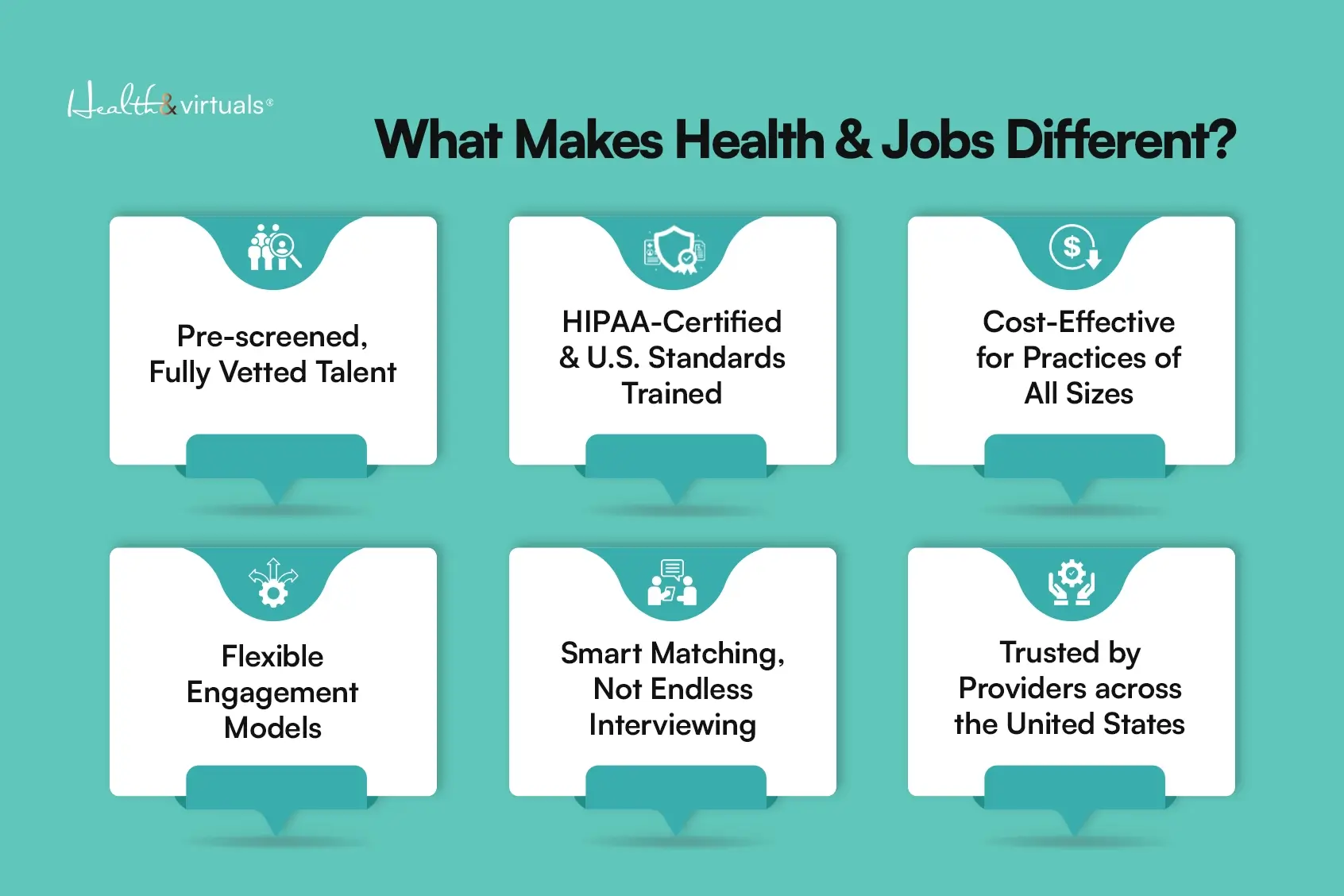
Why Hire With Health & Virtuals?

what makes health and virtuals different copy (1)

04Apr

In-House Hiring vs. Outsourcing Recruiting Services: Which One Is Better For Your Business?

One of the most exhausting corporate tasks is hiring. Finding employees today is no longer just about filling vacancies… It’s about building a system that drives development, productivity, and long-term sustainability. While companies are no longer limited to local talent pools, many still rely on traditional in-house hiring processes that are increasingly slow and inefficient.

On average, it takes 30 to 45 days to hire a candidate. At the same time, the full-time-to-fill cycle can stretch to 63–68 days depending on the industry. For senior and executive roles, this timeline can extend to 90–120 days, delaying business operations even further.

The complexity of modern hiring is a major contributor. 

Companies now conduct multiple interview rounds… often up to 20 per hire, significantly increasing delays. As a result, 60% of organizations report longer hiring timelines, and many fail to meet their hiring goals altogether.

What once emerged as a pandemic-era workaround, remote staffing, has now evolved into a strategic advantage. By tapping into global talent pools and streamlining recruitment processes, businesses can reduce hiring timelines by up to 20–50%, transforming hiring from a bottleneck into a competitive edge.

It does not matter which option is better in general. But which is better for your business model in the present? And the solution of agency vs. in-house recruitment lies in cost structure, operational requirements, and the definition of productivity.


What Is In-House Hiring?

in-person medical scribe documenting patient visit beside physician in clinic exam room

In-house hiring means hiring employees who are physically present in your organization, usually in your office premises. These workers belong to your internal team, usually on a full-time basis, and work in a structured setting.

This classical paradigm provides regulation, homogeneity, and immediate oversight, which is why the model remains popular in various sectors of the economy. Such as manufacturing, healthcare, and finance.

Pros of In-House Hiring

→ Control: It is one of the largest benefits of in-house hiring. Managers will be able to monitor work directly, give feedback in real-time, and maintain the correspondence to the company’s goals.

→ Cohesion: It also has better team cohesion. Workers residing in the same room are bound to establish relationships, which may enhance cooperation and communication.

→ Security: Data security is the other advantage. In sensitive industries, in-house teams are more favored since risks involved with external access are minimized.

→ Less complicated hiring: Finally, the process of onboarding and training is usually less complicated. Knowledge transfer and cultural integration are faster through face-to-face interaction.

Cons of In-House Recruiting

In spite of the advantages, there are serious disadvantages that are associated with in house recruitment.

→ Cost: Overheads, equipment, salaries, and office space can add up very fast. As reported by the Society of Human Resource Management, the average cost per hire may be higher than 4,700 dollars without considering the long term employment costs.

→ Accessibility: Talent is also not easily accessible. You can only have candidates who are within your geographic area, and this may be a significant drawback in niche jobs.

→ Time-consuming: Also, it is not as fast as scaling. Recruiting, training, and developing teams takes time and resources.


What Is Remote Staffing?

Remote professionals working from different locations worldwide

Remote staffing is a practice where professionals are employed even though they are not in your office physically. They are often located in different geographical areas, usually worldwide. These employees may be full-time, part-time and contractual.

Remote staffing is now a thing of the present as digital tools have advanced. Websites such as Upwork and Toptal have simplified the process of finding talented workers across the globe.

Pros of Remote Staffing

→ Cost Saving: The most visible benefit is a savings in costs. Businesses are able to save on office rent, electricity, and even wages when they employ in areas that have lower standards of living.

→ Access to Talent: Virtual staffing also provides access to an international talent pool. Businesses are able to recruit the most suitable individual to work in the organization instead of settling with the candidates who are available within the area.

→ Flexibility: The other significant advantage is flexibility. The remote teams are able to work in different time zones, which allows them to be productive 24 hours a day.

Productivity: A Stanford University study discovered that telecommuters are up to 13 percent more productive than their office colleagues.

Cons of Remote Staffing

Nonetheless, remote staffing is not a problem-free solution. 

→ Time Zone: The time zone difference or absence of a face-to-face interaction may create communication gaps.

→ Scattered Staff: Less team cohesion is also a possibility. Unwittingly, virtual staffing teams can be disconnected from the company culture.

→ Control Issues: It can also be difficult to control performance when not in the office. It involves powerful systems, effective KPIs, and leadership.

→ Security: Lastly, data security is something that may be a concern, particularly with the absence of proper protocols.


Key Differences Between In-House Hiring and Remote Staffing

At a basic level, the distinction between in-house vs external remote recruitment agencies is in place and type. Internal recruiting provides stability and control. Whereas remote staffing focuses on flexibility and scalability.

Internal talent acquisition teams are optimised using direct supervision and teamwork, but remote teams are optimised using digital communication and independence.

There is also a significant difference in cost structures, one of which is fixed overhead, whereas the other is more variable and, generally, lower.

In-House Hiring vs Remote Staffing: Quick Comparison

Factor In-House Hiring Remote Staffing
Cost Efficiency High overhead (rent, utilities, benefits)

Training & retention expenses

Lower operational costs

No office expenses

Productivity ⚖️ Direct communication advantage

No Office distractions

No Commute fatigue

Fewer distractions

No commute = more work time

91% higher job satisfaction

Efficiency Real-time decisions

Faster collaboration

Depends on tools & management

Can streamline workflows digitally

Flexibility Rigid structure

Hard to scale quickly

Highly flexible

Easy to scale up/down

Scalability Slow hiring & onboarding

Infrastructure limitations

Rapid hiring

No physical limitations

Access to Talent Limited to local talent pool

High competition in cities

Global talent access 🌍

Easier to find specialized skills

Employee Satisfaction Stable but routine-bound Higher satisfaction & work-life balance
Long-Term Sustainability Expensive to maintain Cost-effective & growth-friendly

Cost Comparison: Which Is More Affordable?

→ In-House Hiring Costs

In-house recruitment involves both expense visibility and invisibility. Only one aspect of the equation is salaries. You also have to include office rent, equipment, utilities, insurance and employee benefits.

As an example, an employee working in a mid-level position in a large city may attract 1.25-1.4 times his base salary with overhead factored.

They are further accompanied by the costs of training and retention, which are more pronounced in high-turnover industries.

→ Remote Staffing Costs

Overhead is saved greatly by remote staffing. Physical office area is not required, and the cost of operation is low.

Geographic salary arbitrage is also a good idea in many companies and that is, to get qualified professionals in areas where the wages are low, and talent is high.

Global Workplace Analytics estimates that companies could save more than 11000 US dollars annually per virtual staffing worker.


Efficiency and Productivity

→ In-House Teams

In-house teams have the advantage of direct communication and simpler collaboration. Meetings are easier to arrange, and decision-making can be done in real time.

Nevertheless, office distractions, long commutes and strict schedules might sometimes have an impact on productivity.

→ Remote Teams

Remote professionals working from different locations worldwide

Remote teams tend to be more effective as far as the concentration of work is concerned. Employees will be able to spend more time working without commuting and being interrupted by the office.

Buffer conducted a study that revealed that 91% of remote workers said they are more satisfied with their job, which correlates directly with productivity.

With this said, however, effective tools and management practices are essential to success.


Flexibility and Scalability

→ In-House Hiring

Ramping up internal recruiting is time-consuming. Recruitment, onboarding and setting up infrastructure may decelerate growth.

Flexibility is not very much, either. Demand-based adjustment of the workforce can be expensive and complicated.

→ Remote Staffing

Remote staffing is excellent in scalability. Companies are able to add or remove employees within a short time, depending on the project requirement.

This model is especially useful in a start-up or developing company that would require agility without significant commitment.


Access to Talent

→ In-House Hiring

In-house hiring has the limitation of talents pool being restricted to your locality. This may complicate the task of locating very specialized skills.

Salaries are also increased due to the competition for the best talent in big cities.

→ Remote Staffing

Virtual staffing for business growth i, lady working from different time xoneRemote staffing eliminates geographical boundaries. You are able to employ the best professionals throughout the world via remote channels.


It is particularly useful in such positions as tech, marketing, and customer support, where the global experience is plentiful.


When Should You Choose In-House Hiring?

In-house recruitment is best in cases where your company needs close oversight, excessive cooperation or where data security is paramount.

  • This model is beneficial to such industries as healthcare, manufacturing and finance.
  • It is also an excellent option when a powerful internal culture is one of the priorities.

When Should You Choose Remote Staffing?

Remote staffing is most effective when there are flexibility, cost reduction, and the availability of global talent.

  • This model is more efficient with startups, digital businesses, and companies that have project-based work.
  • It is also best suited to jobs that do not need physical presence like virtual assistants, developers and content creators.

Challenges of In-House Hiring

tired office staff due to work burden

In-house recruiting is associated with long-term obligations. After employees have been recruited, it may be challenging and expensive to downsize the workforce.

It is also the difficulty of keeping employees engaged and keeping up with overhead expenses. Moreover, companies can also find it challenging to meet the changing skills demands quickly.


Challenges of Remote Staffing

Remote staffing involves effective communication networks and expectations. In their absence, productivity is at risk of being affected.

The differences in time zones may cause delays, particularly in group projects. Moreover, a unified company culture cannot be established remotely without effort.


In-House vs Remote Staffing: Which One is the Best?

It’s difficult to choose one generalized answer. The right choice is determined by your business objectives, financial capacity, and business requirements.

In-house hiring is the best option in case you value control, stability, and face-to-face cooperation. On the other hand, remote staffing is the wiser option in case you want flexibility, cost effectiveness, and access to talent globally.

In most instances, a hybrid solution, which involves a combination of the two models, can present the best of the two worlds.


Searching for Remote Talent? Hire with Health & Virtuals!

Health and Jobs offering remote staffing solutions for medical virtual assistant and coordination roles

Remote staffing can be a major move in today’s global situation. In case you are willing to expand your business without the overhead associated with conventional hiring, we’re here to help. 

Health & Virtuals is the place where you can find pre-vetted remote professionals who are trained to provide an effective contribution to your business operations. You can get administrative help, find healthcare personnel, or hire specialists, all in one place. 

The right remote team can assist you in developing more rapidly, without sacrificing quality! 

Contact us today


FAQs

Is remote hiring cost-effective?

Yes, particularly with the consideration of decreased overhead, decreased costs of hiring, and the availability of international salary scales. The net present value of the savings can be high.

Can small businesses benefit from recruitment agencies?

Small businesses are the ones who usually gain the most. Agencies save on the time spent in hiring and also assist small groups in getting access to talent that they would otherwise not easily get without the assistance of the agency.

What industries benefit most from remote staffing?

Digital workflow industries, such as technology, marketing, finance, and customer service, are the most likely to experience the largest improvements.

Can businesses use both in-house and remote staffing?

Yes, they can, and many of them do. The default of hybrid models is based on the fact that they are not only stable but flexible.