
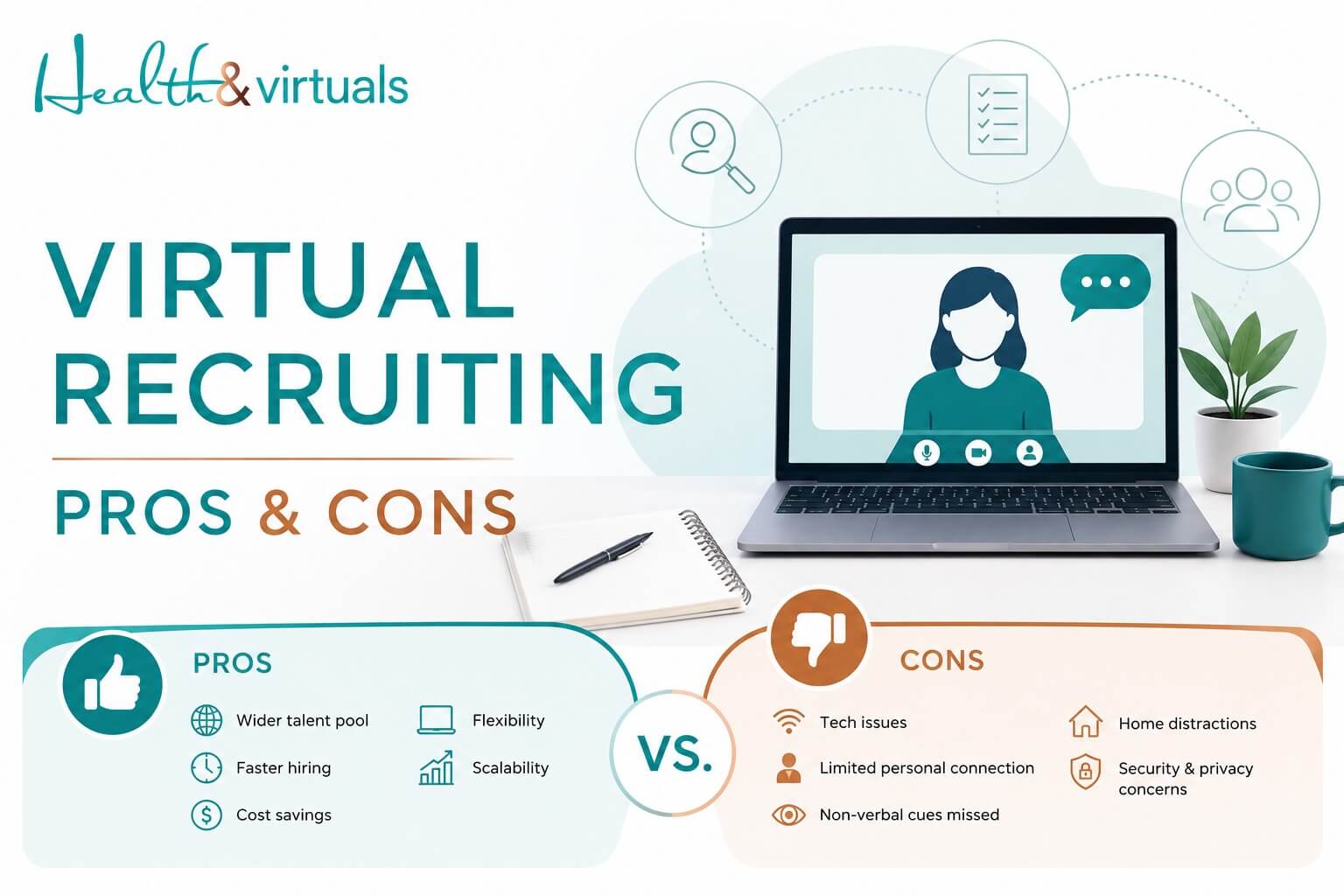
Hiring has seen its biggest shift since the COVID-19 lockdown six years ago. The era of long waits for in-person interviews, unnecessary office visits and geographic limitations is over. In addition to hiring virtual support for their businesses, employers are now increasingly relying on more flexible hiring processes that include virtual recruiting methods such as remote interviews, digital assessments, and online onboarding.
A report by the Society for Human Resource Management backs this shift with data that over 82% of employers have adopted virtual interviews for the hiring process, including sourcing to onboarding. While beneficial in many ways, there is a substantial set of challenges associated with it. Knowing about the both sides is key to building a recruitment strategy that actually works.
What Is Virtual Recruiting?
 Virtual recruiting is a digital hiring process of hiring candidates for a business using online tools. It makes hiring easier for employers as it involves sourcing, screening, and evaluating candidates without in-person interaction.
Candidates no longer have to wait in line for walk-in interviews, visit offices for assessments, and scour job fairs. Instead, they can hunt for a job as per their specialty from the comfort of their home, send application via online forms, and wait out for a response from the business.
Common Virtual Recruiting Methods
The most common online recruiting methods include:
- Video interviews via Zoom, Meet, etc.
- Digital application forms.
- Virtual career fairs and hiring events.
- AI-based resume screening.
- Remote assessments and tests.
- Recruiting via social media ads.
These methods have become the standard for recruiters to manage the entire hiring process remotely, only calling in the candidate in case of a final selection.
Why Is Virtual Recruiting Becoming More Popular?

Online recruitment is not just a trend. Instead, it is a response to evolving dynamics of a workplace that relies on an efficient mode of operations.
The following factors are the biggest drivers of growth in virtual recruiting:
→ Increase in Remote Work Opportunities
Companies are no longer limited to hiring within a specific location.
→ Access to Global Talent
With online recruiting and virtual opportunities, the organizations can reach candidates across regions and time zones without concern for geographic limitations.
→ Faster Hiring Cycles
Digital tools are an efficient way to reduce scheduling delays and manual processes of onboarding.
→ Cost Efficiency
A virtual hiring process is a great way to minimize commute difficulties & expenses on the candidate’s end. It also lifts administrative burden off the hiring staff.
More importantly, virtual recruiting allows candidates flexibility, speed, and convenience.
How Virtual Recruiting Works?

At its core, online recruiting of any type of virtual assistants is not much different from traditional hiring. It essentially involves the same steps, albeit executed digitally.
- Job posting and sourcing: Businesses advertise roles online through job boards and platforms such as LinkedIn.
- Application screening: Employers review applications with the help of automated tools.
- Virtual interviews: Candidates are assessed through video meeting platforms.
- Skills evaluation: Online tests or assignments are prepared to measure the capability of a candidate.
- Final selection and offer: Once selected, candidates are presented with an offer via email.
- Digital onboarding: New hires are integrated into the organization virtually.
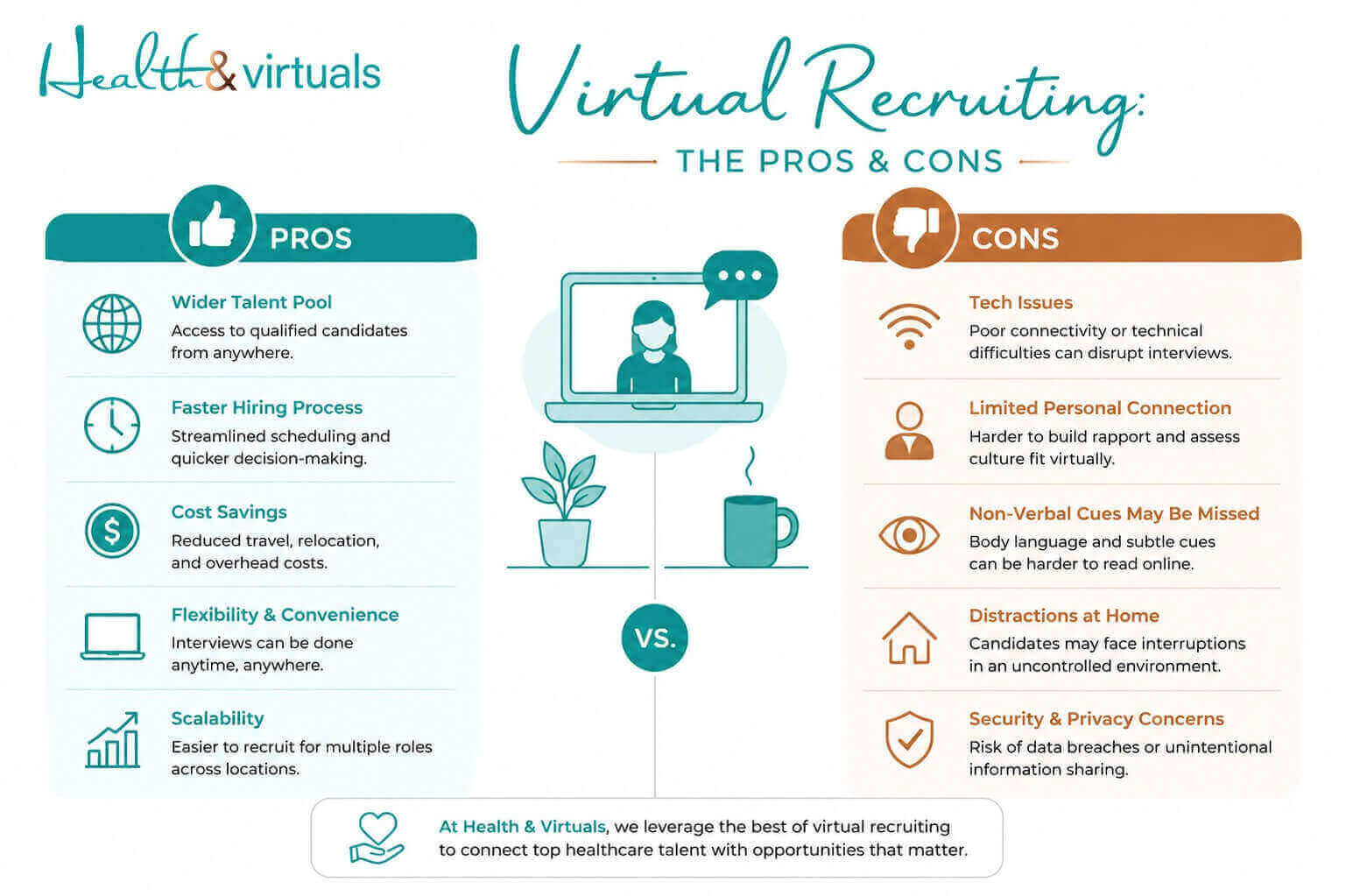
Pros of Virtual Recruiting
Modern organizations are particularly tempted by virtual recruiting due to the number of benefits it offers, such as:
1. Global Talent Acquisition
Recruiters are no longer limited by geography, allowing them to hire purely on the basis of talent regardless of location.
2. Faster Hiring Process
Digital exchange of documents as well as online interviews saves ample time for both the employer and the candidate.
3. Cost Savings
Organizations save on travel allowances, a designated office space, and event-related expenses for virtual candidates.
4. Increased Flexibility
It becomes easier to coordinate a convenient time for both recruiters and candidates to engage, improving participation and efficiency.
5. Scalability
Virtual processes make it easier to handle large volumes of applicants without significantly increasing resources.
Cons of Virtual Recruiting
Despite its advantages, virtual recruiting strategies may fall short in a few areas.
These may include:
1. Limited Interaction
Virtual settings can make it harder to assess personality, communication style, and cultural fit for both employer and candidate.
2. Technology Dependence
The hiring process may experience disruption due to technical issues, including connectivity problems and platform limitations.
3. Candidate Engagement Challenges
Candidates may find it hard to maintain attention and engagement in virtual settings.
4. Risk of Miscommunication
Sometimes, interviews may not go as planned or be misinterpreted due to lack of non-verbal cues in virtual processes.
5. Potential Bias in Digital Tools
Organizations relying on AI-driven screening tools risk judging candidates on the basis of potential bias associated with them.
Best Practices for Virtual Recruiting

Differences between in-house recruiting and online hiring, or we can say pros outweigh the cons… So, virtual recruiting is here to stay. Thus, to make do with it in the most effective way, organizations need to move beyond basic implementation and focus on strategy.
→ Standardize the Process
Hospital, businesses, & organizations should aim to create a structured virtual recruitment workflow to ensure consistency across candidates.
→ Use the Right Mix of Tools
Instead of choosing one digital software and sticking with it for all hiring-related processes, they could combine video interviews, assessments, and communication platforms to create a balanced evaluation.
→ Prioritize Candidate Experience
To make sure candidates are loyally aligned to their potential future workplace, organizations must rely on clear communication, timely updates, and smooth scheduling during the recruitment process.
→ Train Hiring Teams
Recruiters and managers should be trained to evaluate candidates effectively in a virtual setting.
→ Maintain Human Connection
Even in a digital process, personalized interaction is key to building trust and engagement.
Tools Used in Virtual Recruiting
An effective virtual hiring process involves the use of multiple digital tools for different stages. These include:
- Zoom: for live interviews.
- Microsoft Teams: for communication and interviews.
- LinkedIn: for sourcing candidates.
- Google Forms: for managing applications.
What Industries Benefit Most from Virtual Recruiting?
Virtual recruiting is particularly effective in industries where work can afford a smooth transition to remote or digital, such as:
- Technology and software development.
- Digital marketing and media.
- Customer support and virtual services.
- Healthcare administration and virtual assistance.
- Wellness, Chiropractic & Dental practices.
- Finance and consulting.
These industries benefit from faster hiring cycles and access to global talent pools.
Future of Virtual Recruiting

As the future of work is likely to be hybrid, virtual recruiting is expected to continue evolving alongside in-person interactions.
Future remote hiring strategies may include:
→ Greater use of AI in candidate screening.
→ More immersive virtual interview environments.
→ Enhanced data-driven hiring decisions.
→ Increased focus on remote-first workforce strategies.
Virtual recruiting has the power to streamline hiring. However, it requires strong backing by the right talent and process. With Health & Virtuals, a trusted virtual assistant recruitment agency, you can access pre-vetted professionals and end-to-end hiring support to build a more efficient, scalable workforce.
Hire your Virtual Staff, NOW!
FAQs
What is virtual recruiting?
Virtual recruiting is an online hiring process. Virtual hiring is the process of sourcing, screening, and hiring candidates using digital tools in lieu of in-person interactions.
What are the benefits of virtual recruitment?
Main benefit of online hrirng reduces hiring costs. Also the virtual hiring process is faster than convcentional hiring process and expands access to global talent acquisition.
Is virtual recruiting effective?
Yes, virtual recruiting is effective, given it is supported by the right tools and processes. It enables efficient hiring without compromising candidate quality.