
Healthcare Back Office Support: Everything Medical Practices Need to Know
Introduction
Running a successful medical practice requires far more than delivering exceptional patient care. Behind every appointment, prescription, insurance claim, and follow-up call is a complex administrative system that keeps the practice operating efficiently. This is where healthcare back office support becomes essential.
Across Florida, physicians, solo practitioners, specialty clinics, and multi-provider healthcare organizations are facing increasing administrative demands. Staff shortages, rising operational costs, insurance complexities, and growing documentation requirements make it difficult for in-house teams to manage everything efficiently while maintaining excellent patient experiences.
Healthcare back office support helps practices streamline these critical administrative tasks without compromising quality or compliance. Whether it’s managing electronic medical records, verifying insurance eligibility, coordinating referrals, scheduling appointments, or supporting providers with medical documentation, the right support system allows clinical staff to spend more time where they’re needed most—with patients.
If you’re looking to improve operational efficiency, reduce administrative burdens, and scale your practice sustainably, this guide explains everything you need to know about healthcare back office support, its benefits, and why many medical practices throughout Florida are turning to experienced virtual healthcare professionals for long-term growth.
Key Takeaways
✅ Healthcare back office support improves efficiency while reducing administrative workload.
✅ Florida medical practices can lower operational costs through virtual support solutions.
✅ Administrative accuracy helps improve patient satisfaction and practice revenue.
✅ Virtual Medical Assistants can manage multiple back-office responsibilities securely and efficiently.
✅ Outsourcing administrative workflows allows providers to focus on delivering exceptional patient care.
Talk to a Virtual Healthcare Support Specialist
Administrative work shouldn’t keep your providers away from patients.
Health & Virtuals helps Florida medical practices improve workflow efficiency with experienced Virtual Medical Assistants who support scheduling, documentation, insurance verification, referral coordination, and more.
👉 Schedule Your Free Consultation Today: https://healthandvirtuals.com/contact-us/
What Is Healthcare Back Office Support?
Healthcare back office support refers to the administrative and operational functions that keep a medical practice running smoothly behind the scenes. Unlike front-office staff who interact directly with patients, back-office professionals manage the processes that ensure providers can deliver efficient, organized, and compliant healthcare services.
Although patients rarely see these operations, they influence nearly every aspect of the patient experience. From verifying insurance before appointments to updating electronic medical records after a visit, back-office tasks help practices maintain productivity, reduce delays, and improve financial performance.
Healthcare organizations of all sizes—including independent physicians, family medicine clinics, specialty practices, urgent care centers, and multi-location healthcare groups—depend on efficient administrative workflows to maintain operational excellence.
What Does “Back Office” Mean in Healthcare?
The healthcare back office consists of administrative personnel and support systems responsible for managing operational tasks that occur before, during, and after patient visits.
These responsibilities often include:
- Medical documentation
- Insurance eligibility verification
- Prior authorization support
- Appointment scheduling assistance
- Electronic Health Record (EHR) management
- Medical billing preparation
- Referral coordination
- Provider calendar management
- Prescription refill coordination
- Patient follow-up communication
- Secure document management
These tasks may not involve direct patient treatment, but they are essential to maintaining smooth clinical operations.
Back Office vs. Front Office Support
Understanding the difference between front-office and back-office operations helps practice owners determine where support is needed most.
| Front Office | Back Office |
| Patient check-in | Medical documentation |
| Reception | Insurance verification |
| Appointment greeting | Prior authorizations |
| Phone answering | Referral coordination |
| Patient registration | EMR updates |
| Copay collection | Medical billing support |
| Waiting room management | Provider scheduling |
| Patient communication | Clinical documentation support |
While front-office teams focus on patient interaction, healthcare back office support ensures providers have the administrative foundation needed to deliver timely and organized care.
Why Healthcare Back Office Support Matters for Florida Medical Practices
Healthcare delivery has become increasingly complex. Providers today face growing documentation requirements, changing insurance regulations, higher patient expectations, and ongoing staffing shortages.
For many medical practices across Florida, administrative responsibilities consume valuable clinical time that could otherwise be spent caring for patients.
According to industry reports, physicians spend a significant portion of their workday completing documentation and administrative tasks instead of seeing patients. Over time, these inefficiencies contribute to provider burnout, slower patient throughput, scheduling delays, and increased operational expenses.
Healthcare back office support addresses these challenges by creating structured workflows that improve efficiency while reducing the administrative burden on physicians and in-house staff.
Whether your practice serves patients in Tampa, Orlando, Miami, Jacksonville, or anywhere across Florida, optimized back-office operations can significantly improve overall practice performance.
Common Administrative Challenges Medical Practices Face
Many practices experience similar operational issues, including:
- Staff shortages
- Increasing patient volume
- Delayed insurance verification
- Documentation backlogs
- Referral processing delays
- Prior authorization bottlenecks
- Provider burnout
- Inefficient scheduling
- Revenue cycle delays
- Growing administrative costs
Without dedicated support, these issues often impact patient satisfaction, provider productivity, and financial performance.
How Healthcare Back Office Support Improves Patient Care
Although administrative teams rarely interact with patients directly, their work has a significant impact on the overall patient experience.
Efficient healthcare back office support helps practices:
- Reduce appointment delays
- Improve scheduling accuracy
- Minimize insurance-related issues
- Maintain accurate patient records
- Speed up referral processing
- Support better provider communication
- Reduce physician administrative workload
- Improve operational consistency
As a result, providers gain more time to focus on diagnosis, treatment planning, and patient relationships instead of paperwork.
Core Healthcare Back Office Support Services
Healthcare back office support includes a wide range of administrative services that keep a medical practice organized, compliant, and productive. Whether handled by in-house staff or experienced virtual professionals, these responsibilities ensure providers can focus on delivering quality patient care instead of administrative paperwork.
Below are the core functions that make up an efficient healthcare back office.
Medical Documentation Support
Accurate documentation is one of the most important responsibilities in any healthcare practice. Providers must record patient encounters, treatment plans, medications, and follow-up instructions while maintaining complete and organized medical records.
Back office professionals help by:
- Preparing clinical documentation
- Organizing provider notes
- Updating patient records
- Managing encounter documentation
- Maintaining documentation consistency
- Supporting HIPAA-conscious record management
Timely documentation improves continuity of care while reducing the administrative burden placed on physicians.
Insurance Verification
Insurance verification before appointments helps practices avoid claim denials, billing delays, and unexpected costs for patients.
Healthcare back office support teams assist by:
- Verifying active insurance coverage
- Confirming patient eligibility
- Reviewing benefits
- Identifying copay requirements
- Checking referral requirements
- Documenting payer information
This proactive approach improves both patient satisfaction and revenue cycle efficiency.
Prior Authorization Assistance
Many treatments, diagnostic tests, imaging procedures, and medications require prior authorization from insurance companies.
Managing this process internally can consume significant staff time.
Back office professionals help by:
- Preparing authorization requests
- Collecting required documentation
- Coordinating with insurance carriers
- Tracking authorization status
- Following up on pending requests
- Communicating updates to providers
Efficient prior authorization management reduces treatment delays and improves workflow consistency.
Electronic Health Records (EHR/EMR) Management
Electronic medical records are the foundation of modern healthcare operations.
Healthcare back office teams support providers by maintaining organized, accurate, and up-to-date patient records.
Responsibilities often include:
- Updating patient demographics
- Organizing visit documentation
- Uploading laboratory reports
- Recording diagnostic information
- Managing scanned documents
- Maintaining structured records
Well-maintained EHR systems improve provider productivity while supporting better clinical decision-making.
Referral Coordination
Referral management involves much more than sending paperwork to another provider.
Administrative teams coordinate communication between practices while ensuring patients receive timely specialty care.
Typical responsibilities include:
- Preparing referral documentation
- Coordinating specialist appointments
- Sending medical records
- Tracking referral status
- Following up with referring providers
- Updating patient charts
Efficient referral coordination helps reduce delays and improves continuity of patient care.
Appointment Scheduling & Calendar Management
An organized provider schedule improves patient satisfaction while maximizing daily productivity.
Healthcare back office professionals assist with:
- Scheduling appointments
- Rescheduling visits
- Appointment reminders
- Provider calendar management
- Waitlist coordination
- Telehealth scheduling
- Follow-up appointment planning
Efficient scheduling minimizes no-shows while helping providers optimize patient volume.
Medical Billing Support
Although certified billing specialists manage coding and claim submission, healthcare back office support often assists with administrative tasks related to billing workflows.
These responsibilities may include:
- Preparing documentation
- Organizing patient information
- Updating insurance details
- Supporting claim documentation
- Coordinating billing communication
- Tracking claim status
Improved administrative organization contributes to smoother revenue cycle management.
Virtual Medical Assistant Support
One of the fastest-growing solutions for modern medical practices is partnering with a Virtual Medical Assistant (VMA).
Rather than hiring multiple administrative employees, practices can rely on experienced virtual professionals to manage a variety of back-office tasks remotely while integrating with existing practice workflows.
A Virtual Medical Assistant may support:
- Appointment scheduling
- Insurance verification
- Medical documentation
- Referral coordination
- Patient follow-up
- EHR updates
- Provider calendar management
- Administrative communication
For many growing practices, virtual support offers flexibility without sacrificing operational efficiency.
How a Virtual Medical Assistant Fits Into Back Office Operations
Think of your Virtual Medical Assistant as an extension of your existing administrative team.
Instead of replacing your in-house staff, they help reduce repetitive administrative work so your employees can focus on higher-value patient interactions.
At Health & Virtuals, experienced Virtual Medical Assistants work alongside healthcare providers to support daily operations while maintaining secure, organized workflows.
👉 Learn more about our Virtual Medical Assistant services designed specifically for medical practices.
Benefits of Outsourcing Healthcare Back Office Support
As healthcare organizations continue to face staffing shortages and rising operational costs, outsourcing administrative responsibilities has become an increasingly practical solution.
Rather than expanding in-house administrative teams, many Florida medical practices choose flexible virtual support that scales with their needs.
Here are the biggest advantages.
Lower Operating Costs
Hiring, onboarding, training, and retaining administrative staff requires a significant investment.
Outsourcing healthcare back office support can help practices reduce expenses associated with:
- Office space
- Equipment
- Employee benefits
- Recruitment
- Ongoing training
- Payroll overhead
Practices gain experienced administrative support while maintaining greater financial flexibility.
Improved Provider Productivity
Administrative work often extends beyond normal clinic hours, contributing to physician burnout.
When back-office responsibilities are delegated effectively, providers spend more time:
- Seeing patients
- Reviewing treatment plans
- Improving clinical quality
- Growing the practice
- Enhancing patient relationships
Reducing administrative distractions creates a healthier, more productive work environment.
Better Patient Experience
Patients rarely notice efficient administrative operations—but they immediately notice when things go wrong.
Effective healthcare back office support helps create a smoother patient journey through:
- Faster appointment scheduling
- Fewer billing issues
- Accurate insurance verification
- Better communication
- Reduced wait times
- Organized follow-up care
These improvements contribute to stronger patient satisfaction and long-term retention.
Increased Scalability
As your practice grows, administrative responsibilities increase as well.
Healthcare back office support allows practices to expand without immediately hiring multiple new employees.
Whether adding providers, opening new locations, or increasing patient volume, scalable administrative support helps maintain consistent service quality.
Signs Your Practice Needs Healthcare Back Office Support
Many healthcare organizations wait until administrative challenges become overwhelming before seeking additional support.
If your practice is experiencing any of the following issues, it may be time to consider healthcare back office support.
- Your providers spend hours completing paperwork after clinic
- Staff frequently work overtime
- Insurance verification delays affect appointments
- Patient calls are going unanswered
- Referral processing takes too long
- Documentation backlogs continue growing
- Employees appear overwhelmed
- Administrative mistakes are increasing
- Patient satisfaction scores are declining
- Growth has stalled because staff cannot keep up
If several of these situations sound familiar, adding structured back-office support can improve efficiency while allowing your team to focus on delivering exceptional patient care.
Healthcare Back Office Support vs. In-House Administrative Team
| Feature | In-House Team | Healthcare Back Office Support |
| Recruitment Time | High | Minimal |
| Training Investment | High | Reduced |
| Payroll & Benefits | High | More Flexible |
| Scalability | Limited | Easy to Scale |
| Administrative Expertise | Depends on Staff | Experienced Healthcare Professionals |
| Scheduling Flexibility | Office Hours | Extended Support Options |
| Operational Efficiency | Variable | Streamlined Workflows |
Workflow Overview
Patient Appointment Request
│
▼
Insurance Verification
│
▼
Appointment Scheduling
│
▼
Provider Documentation Support
│
▼
Referral / Prior Authorization
│
▼
EHR Updates
│
▼
Administrative Follow-Up
│
▼
Improved Patient Experience
How Health & Virtuals Supports Medical Practices Across Florida
Healthcare practices have different administrative needs depending on their specialty, patient volume, and stage of growth. A solo primary care physician may need help with appointment scheduling and insurance verification, while a multi-provider specialty clinic may require support with referral coordination, documentation, and provider calendars.
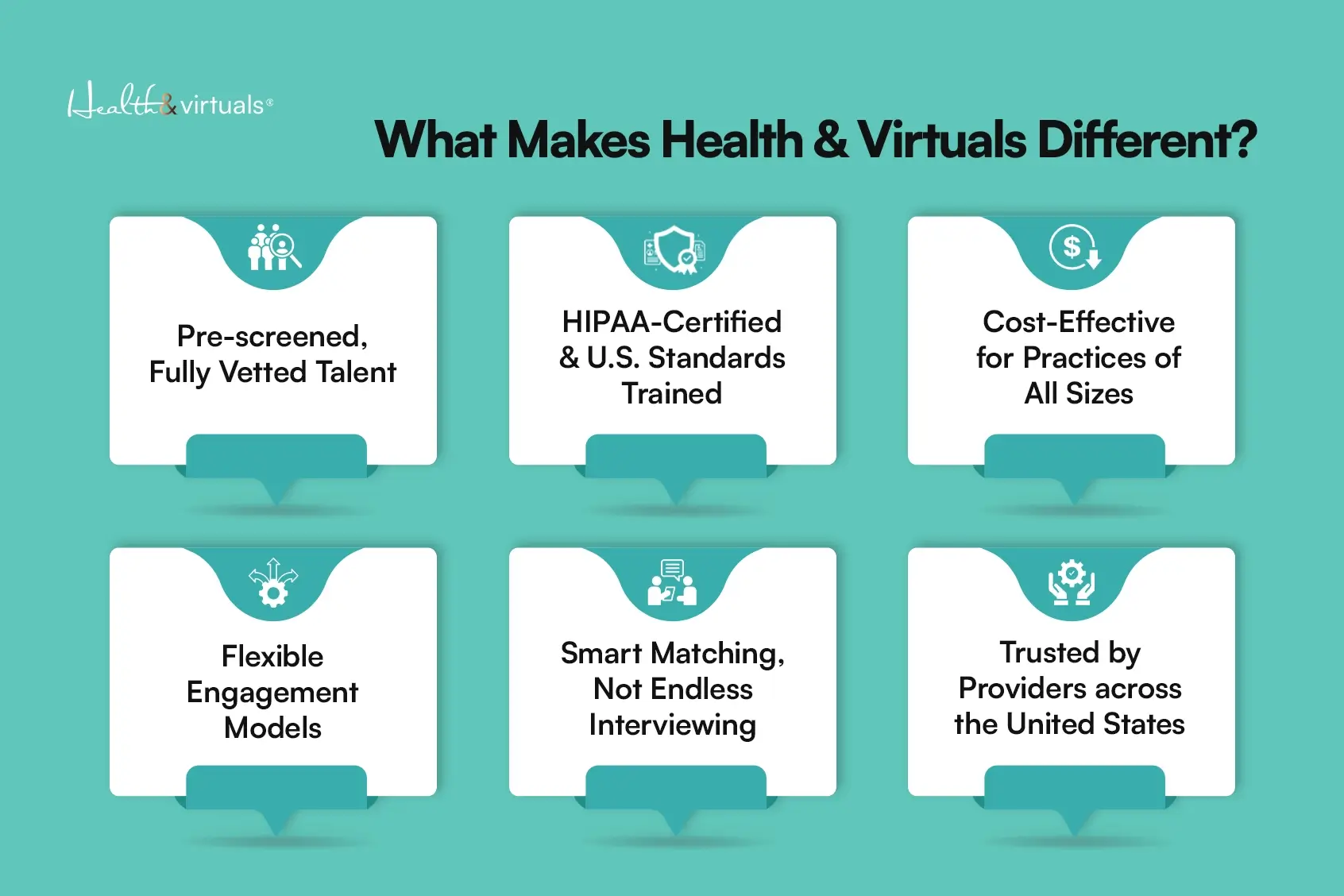
At Health & Virtuals, we provide flexible healthcare back office support solutions designed specifically for healthcare organizations across Florida, USA. Our goal is to help practices reduce administrative workload, improve operational efficiency, and create a better experience for both providers and patients.
Our Virtual Medical Assistants integrate with your existing workflows and can support a variety of day-to-day administrative responsibilities without disrupting your operations.
Customized Support for Every Practice
No two practices operate exactly the same way.
That’s why our support model is tailored to your workflow, staffing structure, and operational goals.
We commonly support:
- Solo physician practices
- Family medicine clinics
- Internal medicine practices
- Behavioral health clinics
- Cardiology practices
- Orthopedic clinics
- Women’s health practices
- Pediatrics
- Urgent care centers
- Multi-location healthcare organizations
Whether you need a few hours of administrative assistance each day or full-time virtual support, we can help build a solution that fits your practice.
HIPAA-Conscious Administrative Processes
Healthcare data requires careful handling.
Our Virtual Medical Assistants follow secure administrative workflows designed to support HIPAA-conscious operations, protect patient confidentiality, and maintain organized documentation.
Support may include:
- Secure documentation management
- Organized EHR workflows
- Insurance information handling
- Appointment coordination
- Administrative communication
- Referral tracking
Practices benefit from consistent administrative processes while maintaining confidence in day-to-day operations.
Experienced Virtual Medical Assistants
Our professionals understand the unique administrative demands of healthcare practices.
They can assist with:
- Insurance verification
- Appointment scheduling
- Patient follow-up
- Referral coordination
- Medical documentation support
- Calendar management
- EHR updates
- Administrative reporting
Instead of spending valuable provider time on repetitive administrative work, your team can stay focused on delivering excellent patient care.
Frequently Asked Questions
1. What is healthcare back office support?
Healthcare back office support includes the administrative tasks that help medical practices operate efficiently. These services may include appointment scheduling, insurance verification, referral coordination, documentation support, EHR updates, provider calendar management, and other operational responsibilities performed behind the scenes.
2. How is healthcare back office support different from front office support?
Front-office staff interact directly with patients by handling check-ins, phone calls, and reception duties. Healthcare back office support focuses on administrative operations such as documentation, insurance verification, referral management, and scheduling that keep the practice running smoothly.
3. Can a Virtual Medical Assistant provide healthcare back office support?
Yes. A Virtual Medical Assistant can assist with many healthcare back office responsibilities, including scheduling, insurance verification, documentation support, referral coordination, patient follow-up, and EHR management, depending on your practice’s needs.
4. Is healthcare back office support suitable for small medical practices?
Absolutely. Solo practitioners and small clinics often benefit from healthcare back office support because it helps reduce administrative workload without requiring additional in-house staff. This allows providers to spend more time with patients while improving operational efficiency.
5. What are the benefits of outsourcing healthcare back office support?
Outsourcing can help practices reduce operating costs, improve administrative efficiency, increase scheduling flexibility, support practice growth, and reduce provider burnout. It also allows clinical staff to focus on patient care instead of repetitive administrative tasks.
6. Does healthcare back office support improve patient satisfaction?
Yes. Efficient administrative workflows contribute to shorter wait times, better appointment coordination, fewer insurance issues, improved communication, and more organized follow-up care—all of which enhance the patient experience.
7. Which medical practices benefit the most from healthcare back office support?
Healthcare back office support can benefit a wide range of organizations, including:
- Primary care practices
- Behavioral health clinics
- Specialty practices
- Urgent care centers
- Pediatrics
- Cardiology clinics
- Orthopedic practices
- Women’s health clinics
- Multi-provider medical groups
8. Why choose Health & Virtuals for healthcare back office support in Florida?
Health & Virtuals provides experienced Virtual Medical Assistants who understand healthcare workflows and can support administrative operations for practices across Florida. Our flexible support model helps clinics improve efficiency while allowing providers to focus on delivering quality patient care.
Conclusion
Administrative efficiency is no longer optional for modern healthcare practices. As patient expectations rise and administrative responsibilities become more complex, providers need reliable systems that support both operational excellence and exceptional patient care.
Investing in healthcare back office support helps reduce administrative burdens, improve workflow efficiency, enhance patient experiences, and create more time for providers to focus on what matters most—caring for patients.
Whether you’re a solo physician, a growing specialty clinic, or a multi-provider healthcare organization in Florida, partnering with experienced virtual administrative professionals can strengthen your practice without adding unnecessary operational complexity.
If you’re ready to streamline your administrative processes, improve productivity, and support sustainable practice growth, Health & Virtuals is here to help.
Ready to Simplify Your Healthcare Operations?
Don’t let administrative work limit your practice’s growth.
Partner with Health & Virtuals for reliable healthcare back office support tailored to the needs of medical practices across Florida.
✅ Reduce administrative workload
✅ Improve operational efficiency
✅ Support better patient experiences
✅ Scale your practice with confidence
Book your free consultation today:
👉 https://healthandvirtuals.com/contact-us/
Business Disclaimer
This article is intended for educational and informational purposes only. It should not be considered legal, financial, or medical advice. Administrative workflows, payer requirements, HIPAA obligations, and healthcare regulations may vary by organization and jurisdiction. Healthcare providers should consult qualified professionals regarding compliance, billing, legal, and operational decisions specific to their practice.