
Medical billing remains one of the most critical functions within a healthcare practice, and thus often the most strained. A patient may receive the best care if the financial health of a clinic is optimal.
There are many factors that impact the revenue of a medical practice, such as errors in billing, delayed submissions, and inefficient follow-ups. Studies suggest that up to 80% of medical bills contain errors, leading to claim denial rates that can range between 5% to 10% or even higher, depending on the practice and specialty.
Meanwhile, administrative tasks continue to account for a substantial portion of operational costs in healthcare. A landmark study for the United States and Canada found that administrative costs for healthcare providers and insurance companies have exceeded $812 billion per year. It is obviously much higher than in countries with simplified, single-payer systems.
This persistent dilemma has led many practices to turn to a cost-effective solution, which is to hire a virtual medical billing assistant instead of solely relying on in-house teams.
Who is your Virtual Medical Billing Coordinator?
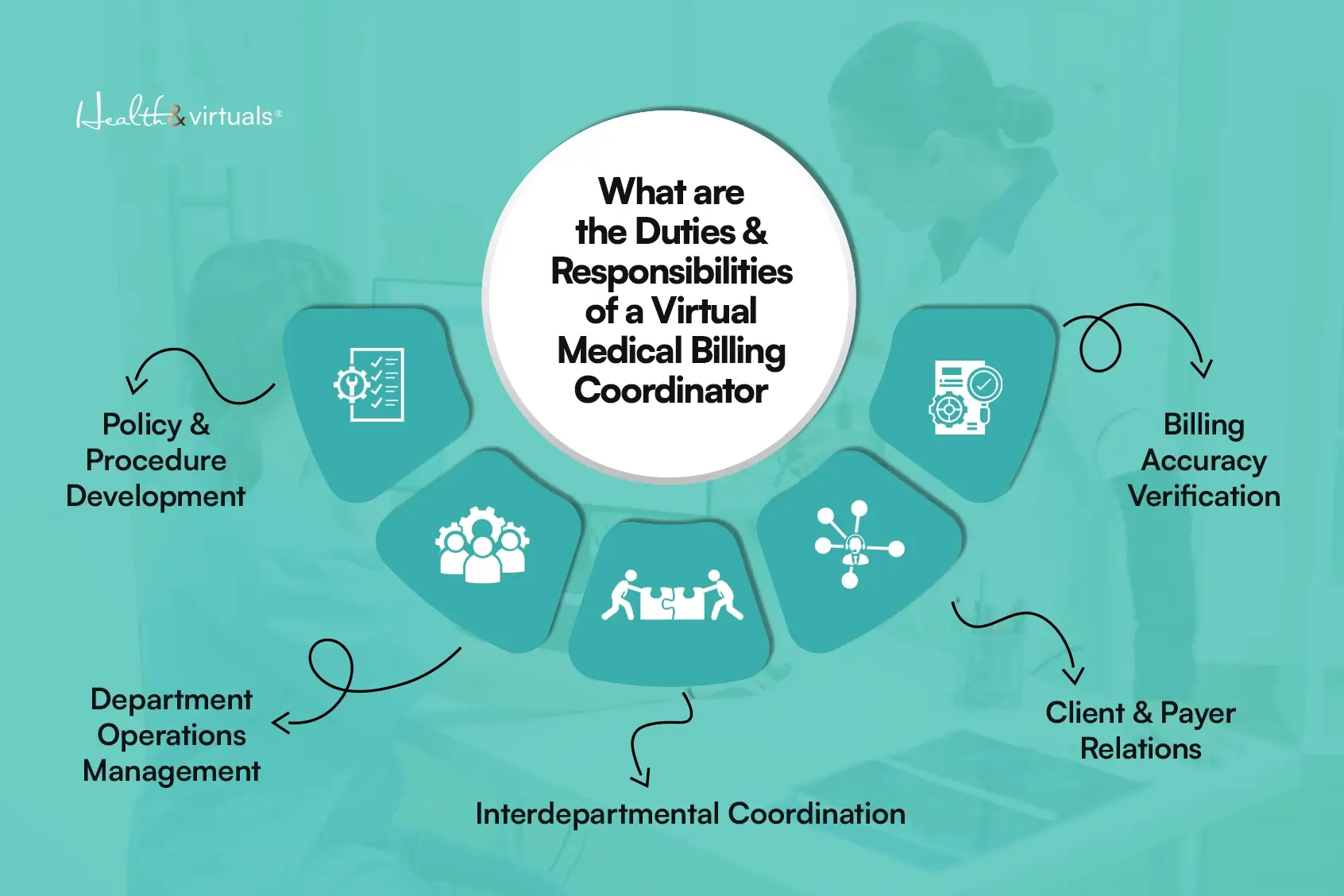 A virtual medical billing coordinator is a remote professional trained to handle billing and revenue cycle management tasks for healthcare providers.
They are meant to improve efficiency, accuracy, and overall revenue performance of a medical practice by assuming the following responsibilities:
- Claim submission and follow-ups.
- Insurance verification.
- Payment posting and reconciliation.
- Denial management and appeals.
- Maintaining accurate billing records.
Despite operating remotely, a virtual medical billing assistant integrates into the clinic’s existing systems and workflows due to the administrative nature of their jobs.
Why Practices Are Moving Toward Virtual Billing?

The rising trend of shift toward virtual billing in healthcare did not come out of the blue. Instead, it is a product of persistent operational pressure with a direct effect on a practice’s revenue cycle.
Industry analyses already stated that outsourcing your revenue cycle management can reduce operational costs by 30% to 40%, depending on practice size and specialty.
Healthcare practices today face:
- Increasing patient volumes.
- Complex insurance requirements.
- Rising administrative costs.
- Staffing shortages.
Relying on an in-house team to manage billing is often a recipe for disaster due to limited resources.
Virtual medical billing presents itself as a reliable alternative, via which practices can:
- Reduce internal workload.
- Access specialized expertise.
- Maintain consistency.
What are the Benefits of Hiring a Virtual Medical Billing Coordinator?

There are endless benefits to hiring a virtual medical billing assistant for a healthcare practice.
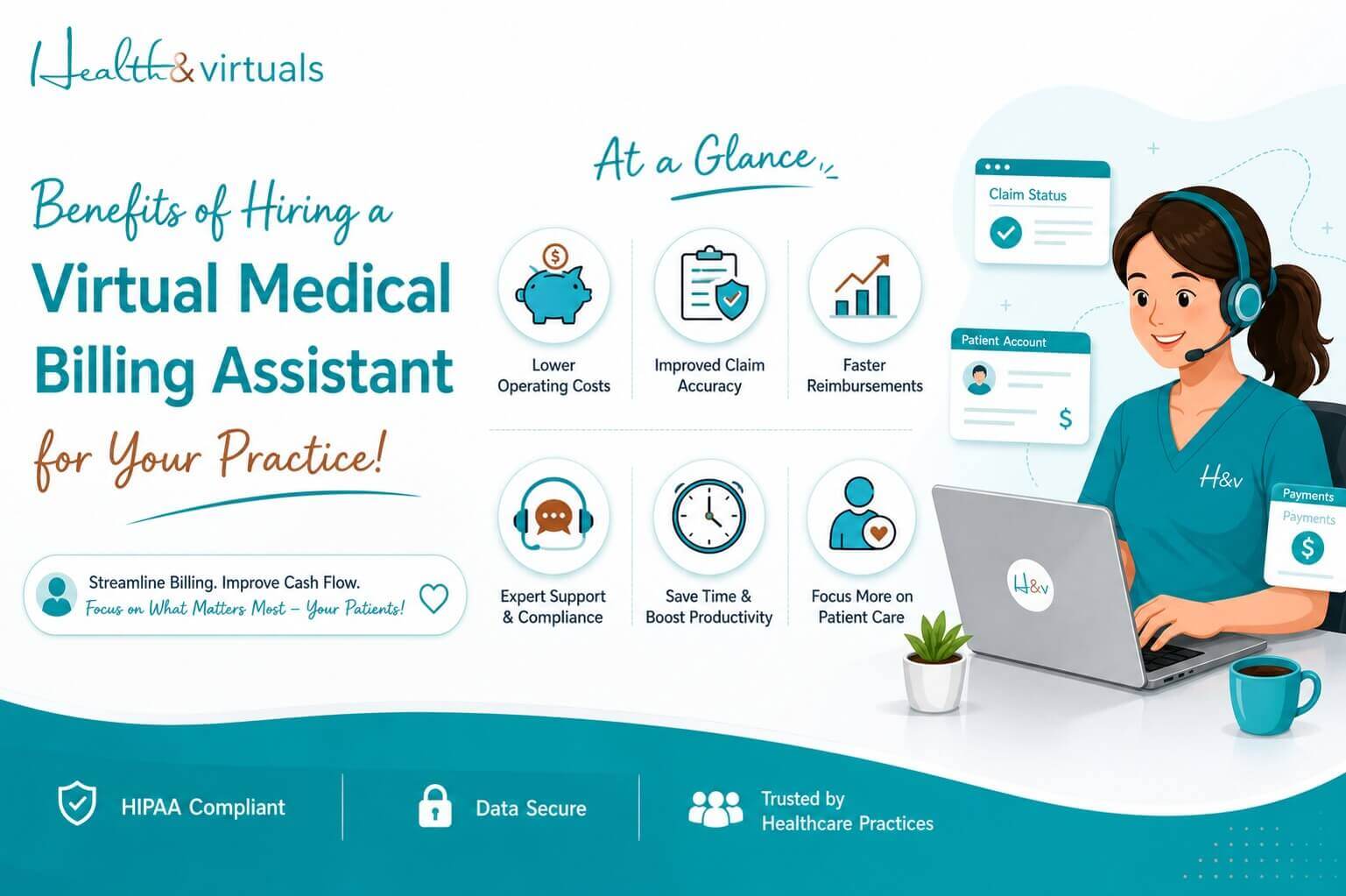
One of the key benefits is that outsourcing administrative work as sophisticated as billing allows clinics to focus on patient care while ensuring that revenue cycle management remains efficient and uninterrupted.
Other benefits include:
1. Reduced Operational Costs
If a practice opts for hiring in-house staff to oversee billing, they are looking at multiple additional expenses. These include salaries, benefits, training, office space, and equipment.
A virtual assistant eliminates many of these overhead costs. They only require reimbursement for the service they provide – without the financial burden of maintaining a full-time, on-site employee. This makes it a cost-effective solution, maximizing your ROI, especially for small to mid-sized practices.
2. Improved Billing Accuracy
Billing errors are one of the leading causes of claim denials and revenue loss. Virtual medical billing assistants are typically well-versed in coding standards, payer requirements, and claim submission processes.
Their focused expertise reduces:
- Coding errors.
- Incorrect claim submissions.
- Documentation inconsistencies.
3. Faster Claim Processing and Payments
To maintain a steady cash flow of a medical practice, it is pertinent to timely submit claims and Timely claim submission and follow-ups.
Virtual billing assistants ensure:
- Claims are submitted promptly.
- Follow-ups are conducted consistently.
- Outstanding payments are tracked and addressed.
This reduces delays in reimbursement and improves the overall financial cycle of the practice.
4. Effective Denial Management
In case of denied claims, the financial health of a clinic is significantly affected. Moreover, it also increases the workload on the administrative team.
Hiring a virtual medical billing coordinator helps reduce denial rates and improve approval outcomes by:
- Identifying root causes.
- Correcting errors.
- Resubmitting claims with proper documentation.
5. Increased Time for Patient Care
Due to the work demand of administrative tasks, healthcare practices may end up compromising on patient care. Delegating billing responsibilities to a virtual medical assistant, in-house teams are able to:
- Focus on patient interaction.
- Improve service quality.
- Reduce administrative stress.
This shift improves both patient experience and staff productivity.
6. Scalability and Flexibility
Virtual medical billing coordinators offer scalability in terms of their services due to the remote nature of their jobs, thus offering an exceptional advantage to employers.
A healthcare practice may scale its services based on:
- Patient volume.
- Billing complexity.
- Practice growth.
7. Access to Specialized Expertise
Billing regulations, coding updates, and insurance policies are constantly evolving.
The nature of their roles equips virtual billing professionals to stay updated with industry regulations, coding standards, and payer-specific requirements without requiring additional training.
8. Better Revenue Cycle Management
All of these benefits come together to generate a stronger revenue cycle. With improved accuracy, faster processing, and consistent follow-ups, practices experience:
- More predictable cash flow.
- Reduced revenue leakage.
- Better financial stability.
When to Hire a Right Virtual Medical Billing Assistant?

There are certain signs that may force a healthcare practice to consider hiring a virtual medical billing assistant. These include:
- Increase in claim denials.
- Delays in payments.
- Overwhelmed staff.
- Frequent errors in coding or submissions.
- Rising administrative costs.
These indicators suggest that the medical billing system of a clinic is under strain and needs support.
Who Should Hire a Virtual Medical Billing Coordinator?
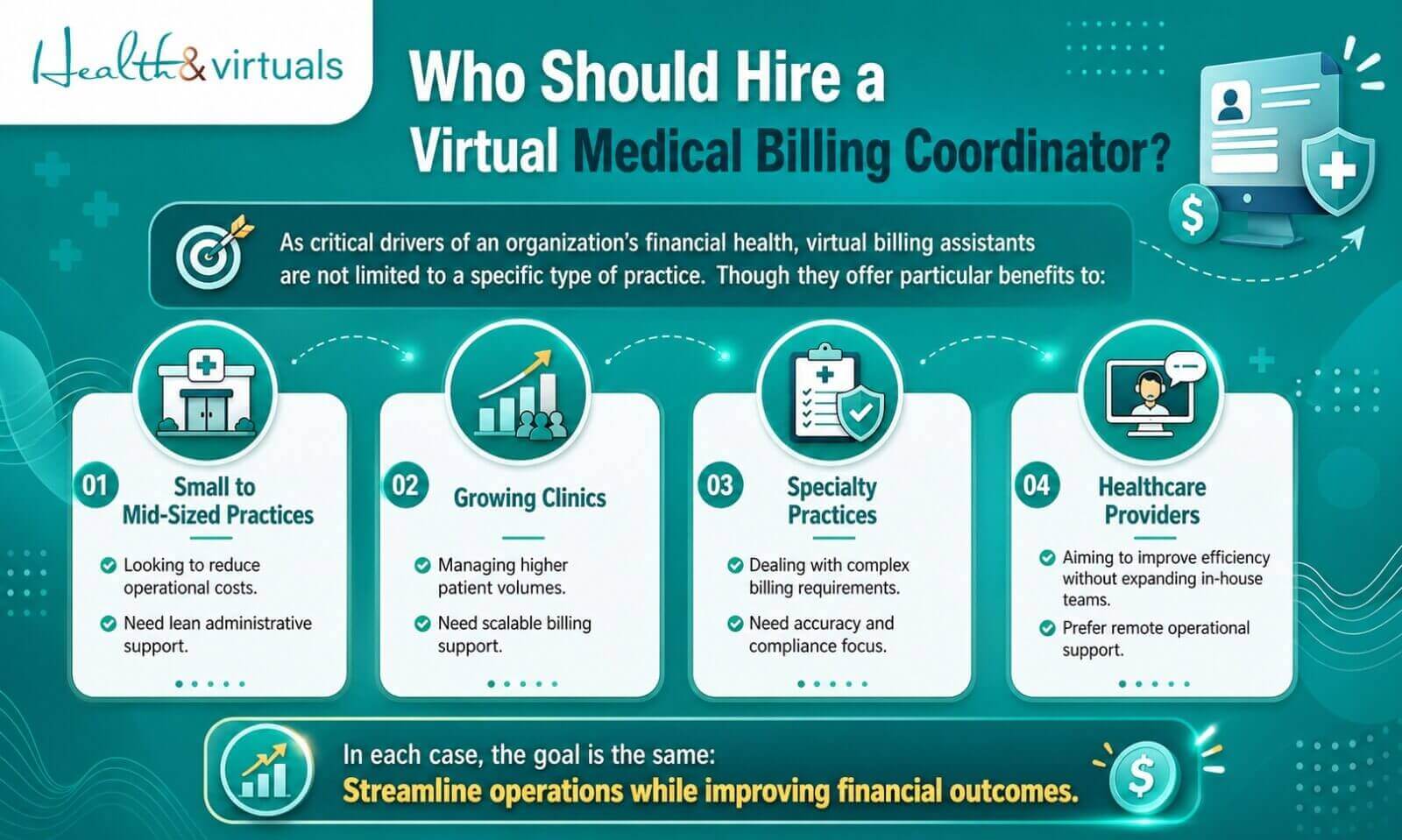
As critical drivers of an organization’s financial health, virtual billing assistants are not limited to a specific type of practice.
Though they offer particular benefits to:
- Small to mid-sized practices that, looking to reduce costs.
- Growing clinics; managing higher patient volumes.
- Specialty practices dealing with complex billing requirements.
- Healthcare providers aiming to improve efficiency without expanding in-house teams.
In each case, the goal is the same: streamline operations while improving financial outcomes.
Ready to Improve Your Medical Billing Performance?

If your practice is struggling with claim denials, delayed payments, or rising administrative costs, it may be time to consider a more efficient approach.
Hire a skilled Virtual Medical Billing Assistant today and streamline your revenue cycle from day one.
→ Reduce billing errors.
→ Improve cash flow.
→ Save administrative time.
→ Focus more on patient care.
Get in touch today to find the right virtual billing support for your practice and start optimizing your revenue cycle.
FAQs
What is the difference between in-house and virtual billing coordinators?
Your in-house billing coordinator works at your workplace. Only in your time zone’s duty hours. A virtual billing coordinator is remotely available and scalable to serve your practice virtually.
Is hiring a virtual medical billing coordinator cost-effective?
Yes. It’s proven. Hiring a virtual medical billing coordinator significantly reduces expenses related to salaries, training, office space, and other benefits. Making it a more cost-effective option for healthcare practices.
How quickly can a virtual billing coordinator start working?
Most virtual billing coordinators can begin within a few days. Though, it depends on the practice’s onboarding requirements, system access, and the complexity of their billing processes.