
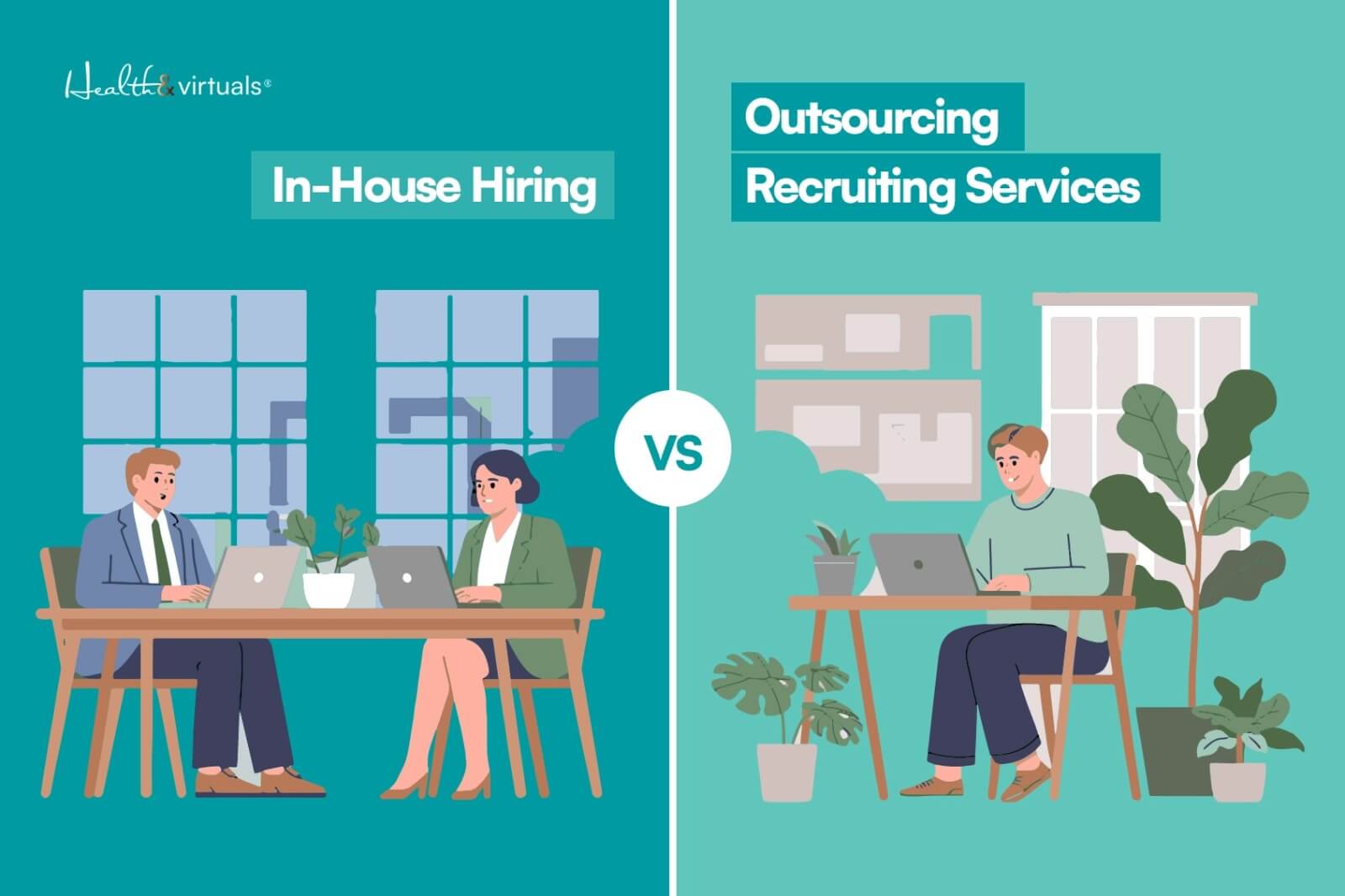
One of the most exhausting corporate tasks is hiring. Finding employees today is no longer just about filling vacancies… It’s about building a system that drives development, productivity, and long-term sustainability. While companies are no longer limited to local talent pools, many still rely on traditional in-house hiring processes that are increasingly slow and inefficient.
On average, it takes 30 to 45 days to hire a candidate. At the same time, the full-time-to-fill cycle can stretch to 63–68 days depending on the industry. For senior and executive roles, this timeline can extend to 90–120 days, delaying business operations even further.
The complexity of modern hiring is a major contributor.
Companies now conduct multiple interview rounds… often up to 20 per hire, significantly increasing delays. As a result, 60% of organizations report longer hiring timelines, and many fail to meet their hiring goals altogether.
What once emerged as a pandemic-era workaround, remote staffing, has now evolved into a strategic advantage. By tapping into global talent pools and streamlining recruitment processes, businesses can reduce hiring timelines by up to 20–50%, transforming hiring from a bottleneck into a competitive edge.
It does not matter which option is better in general. But which is better for your business model in the present? And the solution of agency vs. in-house recruitment lies in cost structure, operational requirements, and the definition of productivity.
What Is In-House Hiring?

In-house hiring means hiring employees who are physically present in your organization, usually in your office premises. These workers belong to your internal team, usually on a full-time basis, and work in a structured setting.
This classical paradigm provides regulation, homogeneity, and immediate oversight, which is why the model remains popular in various sectors of the economy. Such as manufacturing, healthcare, and finance.
Pros of In-House Hiring
→ Control: It is one of the largest benefits of in-house hiring. Managers will be able to monitor work directly, give feedback in real-time, and maintain the correspondence to the company’s goals.
→ Cohesion: It also has better team cohesion. Workers residing in the same room are bound to establish relationships, which may enhance cooperation and communication.
→ Security: Data security is the other advantage. In sensitive industries, in-house teams are more favored since risks involved with external access are minimized.
→ Less complicated hiring: Finally, the process of onboarding and training is usually less complicated. Knowledge transfer and cultural integration are faster through face-to-face interaction.
Cons of In-House Recruiting
In spite of the advantages, there are serious disadvantages that are associated with in house recruitment.
→ Cost: Overheads, equipment, salaries, and office space can add up very fast. As reported by the Society of Human Resource Management, the average cost per hire may be higher than 4,700 dollars without considering the long term employment costs.
→ Accessibility: Talent is also not easily accessible. You can only have candidates who are within your geographic area, and this may be a significant drawback in niche jobs.
→ Time-consuming: Also, it is not as fast as scaling. Recruiting, training, and developing teams takes time and resources.
What Is Remote Staffing?

Remote staffing is a practice where professionals are employed even though they are not in your office physically. They are often located in different geographical areas, usually worldwide. These employees may be full-time, part-time and contractual.
Remote staffing is now a thing of the present as digital tools have advanced. Websites such as Upwork and Toptal have simplified the process of finding talented workers across the globe.
Pros of Remote Staffing
→ Cost Saving: The most visible benefit is a savings in costs. Businesses are able to save on office rent, electricity, and even wages when they employ in areas that have lower standards of living.
→ Access to Talent: Virtual staffing also provides access to an international talent pool. Businesses are able to recruit the most suitable individual to work in the organization instead of settling with the candidates who are available within the area.
→ Flexibility: The other significant advantage is flexibility. The remote teams are able to work in different time zones, which allows them to be productive 24 hours a day.
→ Productivity: A Stanford University study discovered that telecommuters are up to 13 percent more productive than their office colleagues.
Cons of Remote Staffing
Nonetheless, remote staffing is not a problem-free solution.
→ Time Zone: The time zone difference or absence of a face-to-face interaction may create communication gaps.
→ Scattered Staff: Less team cohesion is also a possibility. Unwittingly, virtual staffing teams can be disconnected from the company culture.
→ Control Issues: It can also be difficult to control performance when not in the office. It involves powerful systems, effective KPIs, and leadership.
→ Security: Lastly, data security is something that may be a concern, particularly with the absence of proper protocols.
Key Differences Between In-House Hiring and Remote Staffing
At a basic level, the distinction between in-house vs external remote recruitment agencies is in place and type. Internal recruiting provides stability and control. Whereas remote staffing focuses on flexibility and scalability.
Internal talent acquisition teams are optimised using direct supervision and teamwork, but remote teams are optimised using digital communication and independence.
There is also a significant difference in cost structures, one of which is fixed overhead, whereas the other is more variable and, generally, lower.
In-House Hiring vs Remote Staffing: Quick Comparison
| Factor | In-House Hiring | Remote Staffing |
| Cost Efficiency | High overhead (rent, utilities, benefits)
Training & retention expenses |
Lower operational costs
No office expenses |
| Productivity | ⚖️ Direct communication advantage
No Office distractions No Commute fatigue |
Fewer distractions
No commute = more work time 91% higher job satisfaction |
| Efficiency | Real-time decisions
Faster collaboration |
Depends on tools & management
Can streamline workflows digitally |
| Flexibility | Rigid structure
Hard to scale quickly |
Highly flexible
Easy to scale up/down |
| Scalability | Slow hiring & onboarding
Infrastructure limitations |
Rapid hiring
No physical limitations |
| Access to Talent | Limited to local talent pool
High competition in cities |
Global talent access 🌍
Easier to find specialized skills |
| Employee Satisfaction | Stable but routine-bound | Higher satisfaction & work-life balance |
| Long-Term Sustainability | Expensive to maintain | Cost-effective & growth-friendly |
Cost Comparison: Which Is More Affordable?
→ In-House Hiring Costs
In-house recruitment involves both expense visibility and invisibility. Only one aspect of the equation is salaries. You also have to include office rent, equipment, utilities, insurance and employee benefits.
As an example, an employee working in a mid-level position in a large city may attract 1.25-1.4 times his base salary with overhead factored.
They are further accompanied by the costs of training and retention, which are more pronounced in high-turnover industries.
→ Remote Staffing Costs
Overhead is saved greatly by remote staffing. Physical office area is not required, and the cost of operation is low.
Geographic salary arbitrage is also a good idea in many companies and that is, to get qualified professionals in areas where the wages are low, and talent is high.
Global Workplace Analytics estimates that companies could save more than 11000 US dollars annually per virtual staffing worker.
Efficiency and Productivity
→ In-House Teams
In-house teams have the advantage of direct communication and simpler collaboration. Meetings are easier to arrange, and decision-making can be done in real time.
Nevertheless, office distractions, long commutes and strict schedules might sometimes have an impact on productivity.
→ Remote Teams
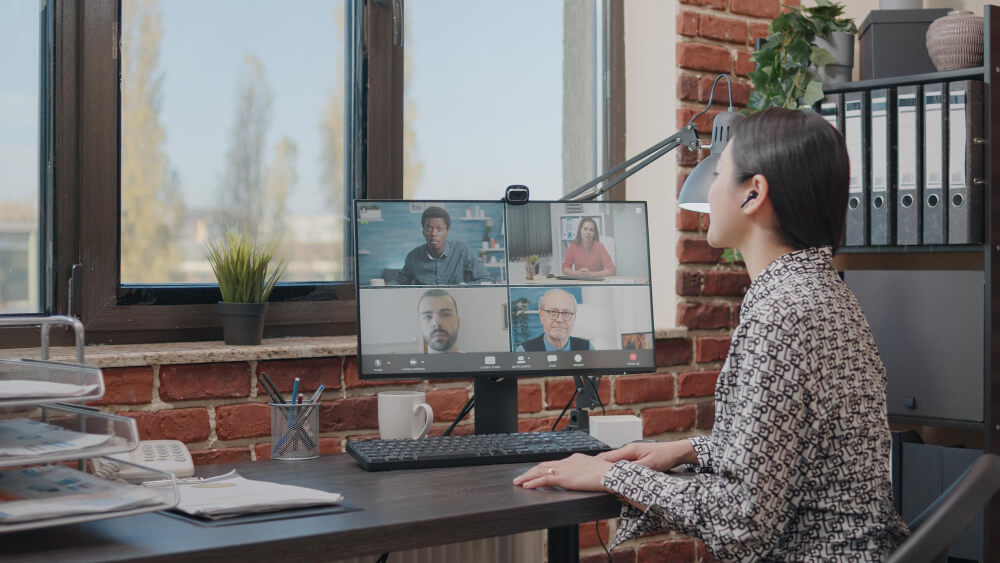
Remote teams tend to be more effective as far as the concentration of work is concerned. Employees will be able to spend more time working without commuting and being interrupted by the office.
Buffer conducted a study that revealed that 91% of remote workers said they are more satisfied with their job, which correlates directly with productivity.
With this said, however, effective tools and management practices are essential to success.
Flexibility and Scalability
→ In-House Hiring
Ramping up internal recruiting is time-consuming. Recruitment, onboarding and setting up infrastructure may decelerate growth.
Flexibility is not very much, either. Demand-based adjustment of the workforce can be expensive and complicated.
→ Remote Staffing
Remote staffing is excellent in scalability. Companies are able to add or remove employees within a short time, depending on the project requirement.
This model is especially useful in a start-up or developing company that would require agility without significant commitment.
Access to Talent
→ In-House Hiring
In-house hiring has the limitation of talents pool being restricted to your locality. This may complicate the task of locating very specialized skills.
Salaries are also increased due to the competition for the best talent in big cities.
→ Remote Staffing
 Remote staffing eliminates geographical boundaries. You are able to employ the best professionals throughout the world via remote channels.
It is particularly useful in such positions as tech, marketing, and customer support, where the global experience is plentiful.
When Should You Choose In-House Hiring?
In-house recruitment is best in cases where your company needs close oversight, excessive cooperation or where data security is paramount.
- This model is beneficial to such industries as healthcare, manufacturing and finance.
- It is also an excellent option when a powerful internal culture is one of the priorities.
When Should You Choose Remote Staffing?
Remote staffing is most effective when there are flexibility, cost reduction, and the availability of global talent.
- This model is more efficient with startups, digital businesses, and companies that have project-based work.
- It is also best suited to jobs that do not need physical presence like virtual assistants, developers and content creators.
Challenges of In-House Hiring

In-house recruiting is associated with long-term obligations. After employees have been recruited, it may be challenging and expensive to downsize the workforce.
It is also the difficulty of keeping employees engaged and keeping up with overhead expenses. Moreover, companies can also find it challenging to meet the changing skills demands quickly.
Challenges of Remote Staffing
Remote staffing involves effective communication networks and expectations. In their absence, productivity is at risk of being affected.
The differences in time zones may cause delays, particularly in group projects. Moreover, a unified company culture cannot be established remotely without effort.
In-House vs Remote Staffing: Which One is the Best?
It’s difficult to choose one generalized answer. The right choice is determined by your business objectives, financial capacity, and business requirements.
In-house hiring is the best option in case you value control, stability, and face-to-face cooperation. On the other hand, remote staffing is the wiser option in case you want flexibility, cost effectiveness, and access to talent globally.
→In most instances, a hybrid solution, which involves a combination of the two models, can present the best of the two worlds.
Searching for Remote Talent? Hire with Health & Virtuals!

Remote staffing can be a major move in today’s global situation. In case you are willing to expand your business without the overhead associated with conventional hiring, we’re here to help.
Health & Virtuals is the place where you can find pre-vetted remote professionals who are trained to provide an effective contribution to your business operations. You can get administrative help, find healthcare personnel, or hire specialists, all in one place.
The right remote team can assist you in developing more rapidly, without sacrificing quality!
FAQs
Is remote hiring cost-effective?
Yes, particularly with the consideration of decreased overhead, decreased costs of hiring, and the availability of international salary scales. The net present value of the savings can be high.
Can small businesses benefit from recruitment agencies?
Small businesses are the ones who usually gain the most. Agencies save on the time spent in hiring and also assist small groups in getting access to talent that they would otherwise not easily get without the assistance of the agency.
What industries benefit most from remote staffing?
Digital workflow industries, such as technology, marketing, finance, and customer service, are the most likely to experience the largest improvements.
Can businesses use both in-house and remote staffing?
Yes, they can, and many of them do. The default of hybrid models is based on the fact that they are not only stable but flexible.