
Walk into a dental practice, and the patient feels the pressure right away – not just in the treatment rooms, but at the front desk too. The staff is often inundated with appointments that need scheduling, insurance verification, claims submitted, and queries of patients answered. This adds to the operational challenges for many practices, leading to staff burnout, inefficiencies, and revenue loss.
A virtual dental assistant as a helping hand here… There must be a reason that more and more dental practices are turning to remote dental administration support and hire a dental virtual assistant to handle time-intensive, non-clinical tasks.
The strategic approach is aimed at improving the efficiency of a practice, reducing staffing costs, and ensuring optimal patient experience.
What Is Virtual Dental Administration?
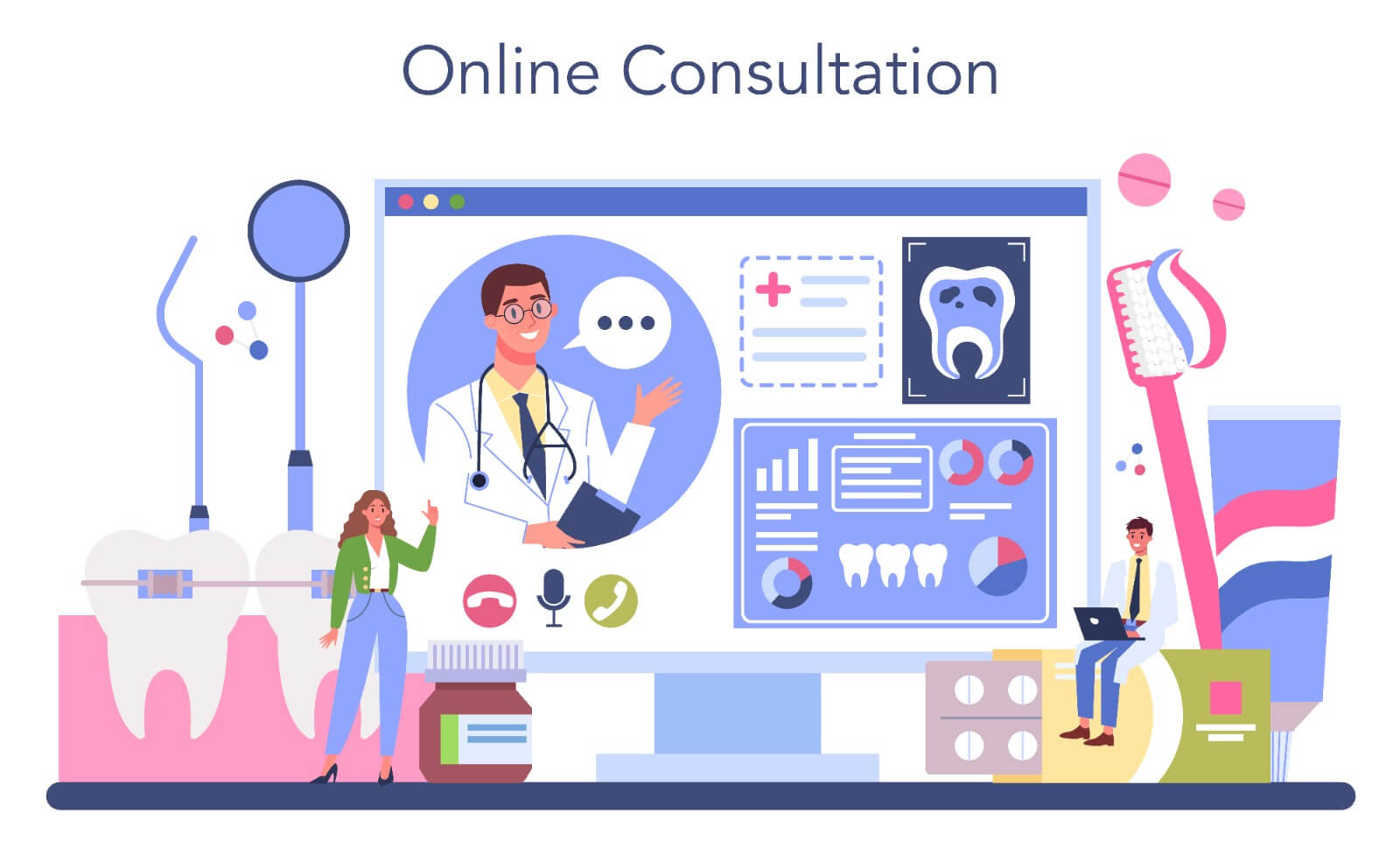
Virtual dental administration is the remote management of non-clinical operations of a dental practice. These include tasks that are too time-consuming to be handled by in-house staff.
Common tasks delegated to virtual dental assistants include:
- Appointment scheduling and calendar management.
- Insurance verification and eligibility checks.
- Claims submission and follow-ups.
- Patient communication.
- Billing coordination and payment tracking.
- Data entry and record management.
Since they are specifically hired for dental practices, these virtual assistants are required to be familiar with:
- Basic dental terminology.
- Insurance processes.
- Practice management software.
Why Is Virtual Dental Administration Growing in Dentistry?

Hiring a virtual assistant for busy dental practice has become the new normal. This change is particularly driven by structural challenges within the industry. These include:
→ Staffing Shortages
Most dental practices struggle with hiring and retaining skilled staff for front-desk operations. This is due to the high turnover of employees and the limited talent pool.
→ Increase in Operational Costs
There is a separate set of expenses beyond salaries associated with hiring in-house staff. This includes training, benefits, workspace, and equipment.
Virtual staffing has proved to be a cost-effective alternative.
→ Increased Administrative Workload
Administrative tasks such as insurance processes, compliance requirements, and patient communication demands have only gotten more complex in the wake of modern healthcare.
This puts more administrative work on staff, pulling focus away from clinical tasks.
→ Shift Toward Digital Workflows
As practices adopt digital tools for scheduling, billing, and communication, hiring online assistants often makes the most sense for managing these processes.
→ Demand for Efficiency and Scalability
Virtual assistants for dental professionals are a practical solution to growing their practice without proportionally increasing operational costs.
How Virtual Dental Administration Is Reshaping Modern Dentistry?

There are many ways virtual dental administration is contributing to making the operations of a dental practice more efficient.
In fact, the remote professionals are not just replacing tasks; they are also changing how these clinics operate at a structural level.
1. Decoupling Clinical and Administrative Functions
Traditional front-desk staff at a dental office is expected to handle multiple responsibilities – sometimes both clinical and non-clinical tasks – within the physical space.
A virtual dental executive assistant is only meant to handle backend operations while clinical teams focus on patient care.
2. Improving Operational Efficiency
Staff shortage is a universal problem in healthcare. Dedicating a remote team to administrative work only, such as insurance verification or schedule management, improves overall practice performance by ensuring:
- Faster turnaround times.
- Fewer errors.
- More consistent workflows.
3. Extended Availability
An online dental assistant offers an advantage in terms of operating across different time zones. This availability beyond office hours enables:
- After-hours appointment scheduling.
- Faster response to patient inquiries.
- Reduced backlog of administrative tasks.
This helps foster a more responsive and accessible patient experience.
4. Enhancing Patient Experience
Patient satisfaction is key to a successful healthcare practice. Hiring virtual support ensures smooth functions within a dental practice, including:
- Consistent answering of calls.
- Efficient management of appointments.
- Prompt handling of billing queries.
5. Supporting Revenue Cycle Management
The RCM or revenue health of a dental practice depends on minimal or no errors in billing or payment processing.
A virtual dental assistant helps maintain the standard by:
- Accurately verifying insurance.
- Submitting clean claims.
- Consistently following up on unpaid claims.
Benefits of Remote Dental Administration for Your Dental Practice
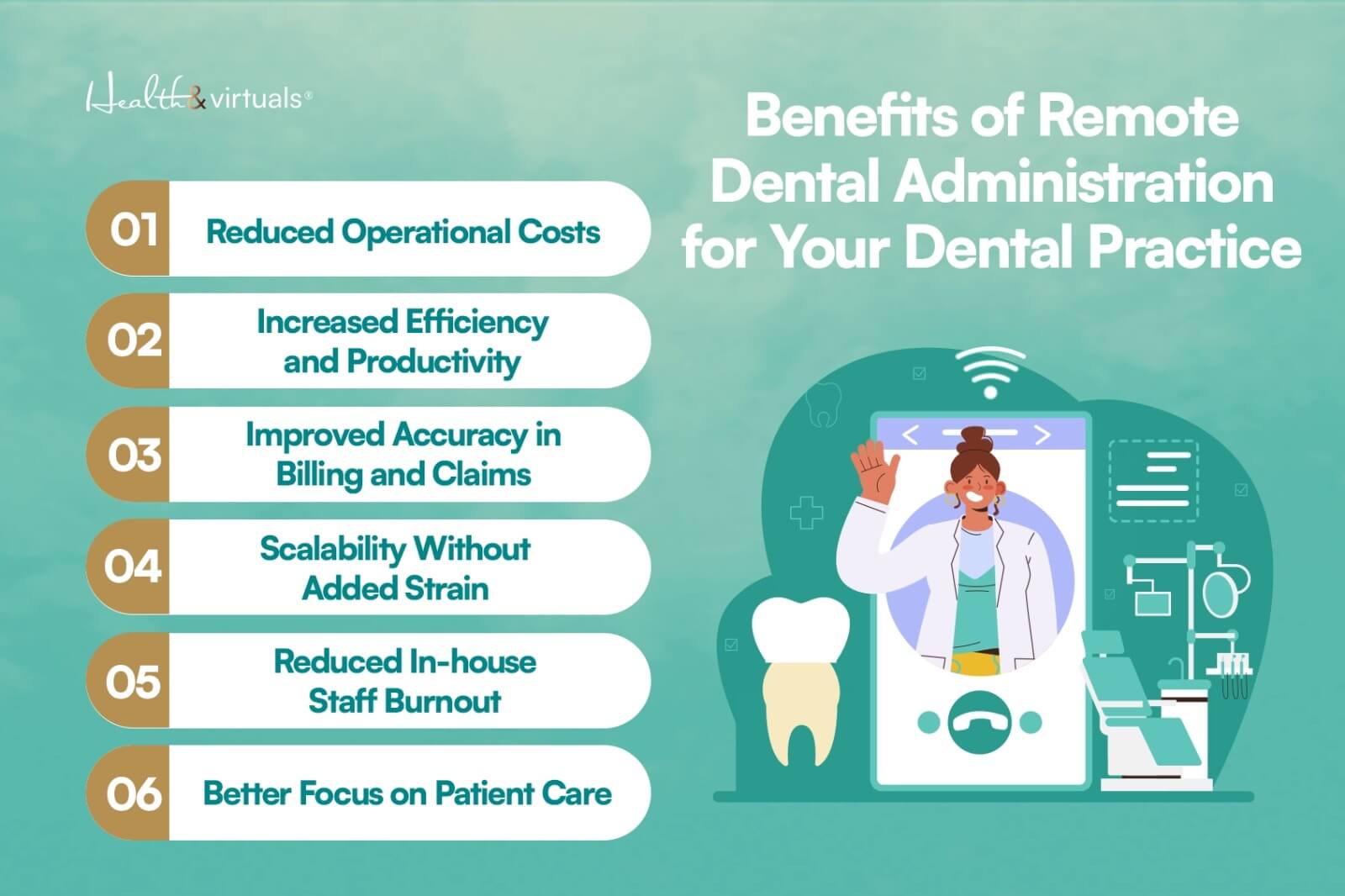
A dental practice is only as good as its operational efficiency. Remote staffing is already proven to be more beneficial than in-house staffing in some aspects. Thus, the impact of virtual dental administration is most visible in its tangible benefits.
1. Reduced Operational Costs
Choosing to hire any type of virtual assistant, a dental office saves on:
- Salaries and benefits.
- Office space and equipment.
- Training and onboarding.
This practice allows better allocation of financial resources.
2. Increased Efficiency and Productivity
Having a dedicated remote support at a practice’s disposal is beneficial as:
- Tasks are completed faster.
- Staff workload is reduced.
- Workflows become more streamlined.
3. Improved Accuracy in Billing and Claims
Experienced virtual dental assistants reduce errors in:
- Insurance verification.
- Coding and documentation.
- Claims submission.
This leads to fewer denials and faster reimbursements.
4. Scalability Without Added Strain
Practices rely on virtual support to scale operations as patient volume grows. This refers to expanding administrative capacity without physical constraints.
5. Reduced In-house Staff Burnout
Administrative overload is a major contributor to burnout among staff at a dental practice.
By offloading repetitive tasks, they can:
- Improve staff satisfaction.
- Reduce turnover.
- Maintain a more balanced work environment.
6. Better Focus on Patient Care
When administrative responsibilities are handled efficiently by remote dental assistants, dentists and clinical staff can dedicate more time to treatment and patient interaction.
The Future of Virtual Dental Administration
With more and more healthcare practices turning toward hiring virtual support, it ought to become a standard component of modern dental practice management. However, the shift will not be void of future developments. These include:
- Greater integration with AI-driven scheduling and billing tools.
- More specialized remote roles (e.g., insurance specialists, RCM experts).
- Hybrid administrative models combining in-house and virtual teams.
- Increased reliance on data analytics for operational decision-making.
As technology continues to evolve, the line between in-house and remote operations will become less distinct.
Bottom Line
Virtual dental administration is no longer just a temporary solution to staffing challenges. It is evidence of a strategic shift in how dental practices operate.
By improving efficiency, reducing costs, and enhancing patient experience, it addresses some of the most pressing challenges in modern dentistry.
The practices that adapt early are not just solving today’s operational issues – they are building more flexible, scalable systems for the future.
Administrative overload shouldn’t slow down your practice. And the clinical team should be focusing on care, not coordination.
With your trusted remote staffing agency, Health & Virtuals, hire virtual dental assistants… Our talent pool has pre-vetted, highly qualified professionals trained in streamlining scheduling, billing, and patient communication for your clinic.